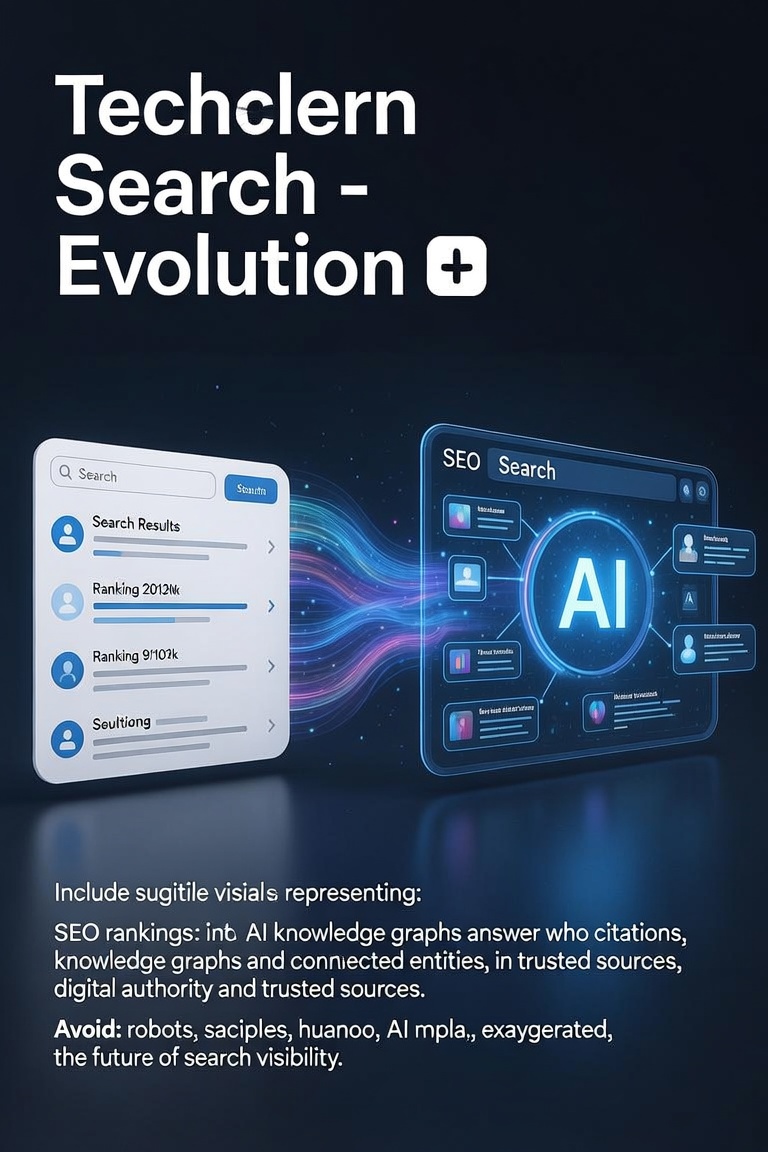
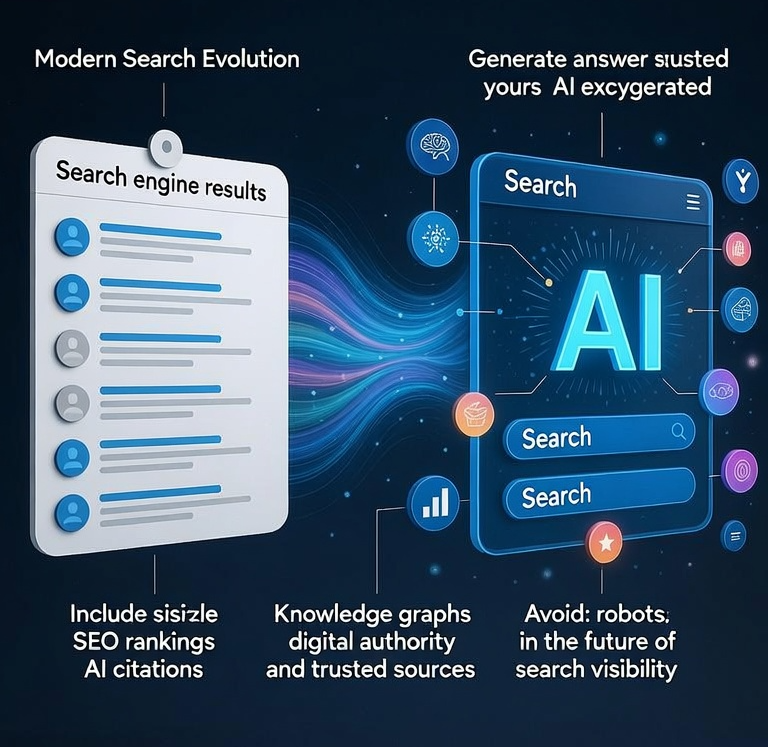
For a long time, search engines have evaluated content mainly through signals connected to the page itself: relevance, links, structure, technical quality and the ability to answer a user's query.
But AI search introduces a different type of problem.
When an AI system generates an answer, it is not only deciding which document matches a keyword. It is trying to understand information, connect concepts and determine which sources can help explain a topic.
This raises an interesting question that is still largely unexplored:
Does the identity behind a piece of content influence how that information is understood and reused by AI systems?
There is currently no public evidence that a recognizable author name works as a direct ranking factor in AI search. However, the web has always been built around relationships between information and entities, and AI systems appear to rely heavily on understanding those relationships.
This is where authorship becomes an interesting area of research.
Content Has Always Had a Source. AI May Make That More Visible.
An article has never existed in isolation.
Behind every piece of content there is usually an author, a company, a publication or a community. Traditional search often reduced this complexity into measurable signals: links, mentions and rankings.
AI systems operate in a different environment.
A language model does not simply need to find a page. It needs to construct an answer that makes sense. To do that, understanding the context around information becomes increasingly important.
A statement written by an unknown source and the same statement written by a recognized expert may contain identical words, but they exist inside different knowledge environments.
The surrounding context changes the meaning.
The Difference Between Information and Recognizable Knowledge
The internet contains an enormous amount of information.
The challenge for AI systems is not only finding information. It is understanding which information belongs to reliable and meaningful sources.
Consider a website that publishes hundreds of articles about many unrelated subjects, with no clear authorship or identity.
Now compare it with a specialist who has spent years discussing one specific field, publishing research, participating in conversations and building a recognizable digital presence.
Both may publish useful content.
But the second creates a stronger connection between the information and the entity behind it.
This connection is interesting because AI systems are increasingly built around relationships between concepts, not just isolated text.
Authorship as Part of a Larger Digital Identity
It would be a mistake to think that adding an author box suddenly creates authority.
A name alone does not make content trustworthy.
The interesting question is how different signals combine over time.
An author who consistently contributes to a specific topic creates a pattern:
their name appears alongside certain concepts, discussions and expertise areas.
A company develops a similar identity through its content, products, research and public presence.
In this sense, authorship becomes part of a larger entity structure.
An Open Research Question
The relationship between authorship and AI visibility is still unclear.
Large language models are complex systems, and many of their internal processes are not publicly observable. Any conclusion should therefore be treated as a hypothesis, not as an established rule.
However, the direction is worth investigating.
The traditional web rewarded pages that ranked well.
The AI-driven web may increasingly reward sources that are easier to identify, understand and connect.
This does not replace traditional SEO. It expands the concept of visibility.
NetContentSEO AI Labs: Studying the Transition
At NetContentSEO AI Labs, we are exploring how search visibility changes when machines move from retrieving documents to generating answers.
The goal is not to create artificial formulas for AI optimization.
The goal is to understand how content, authorship and digital identity interact in a new information ecosystem.
If AI systems need to understand the origin and context of information, then building a recognizable knowledge presence may become an increasingly important part of digital strategy.
The question for the future may not only be:
"How do we rank?"
It may also become:
"Can AI understand who we are and why our information matters?"