
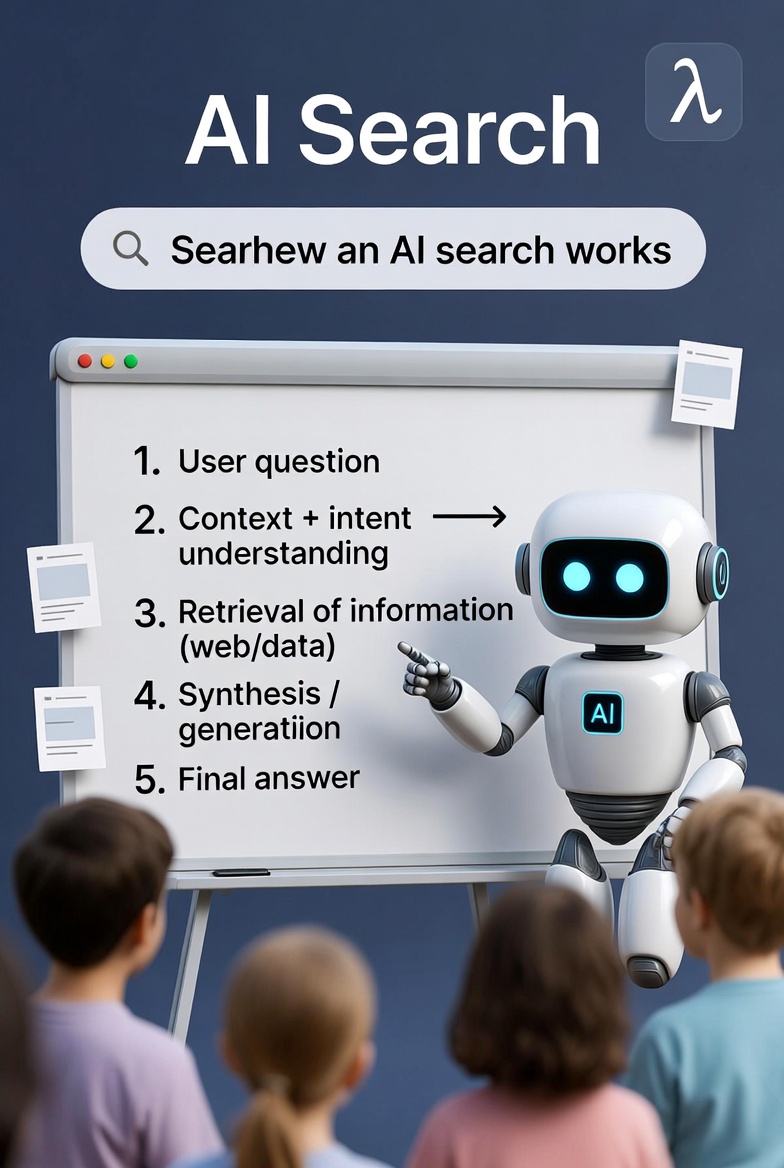
AI-driven search interfaces may be simplifying the user experience while hiding the underlying process. Early signals suggest a shift from visible exploration to invisible resolution.
We may be starting to see another shift in how search works — not just in the results themselves, but in how the process is experienced by users. Traditionally, search has always been a visible journey: users enter a query, review multiple results, compare sources, refine their searches, and gradually build an understanding. That process was part of the experience.
With AI-generated answers becoming more prominent, that journey appears to be changing. Early signals suggest that much of the process is now being compressed into a single interaction: a user asks a question, the system interprets intent, retrieves and processes multiple signals, and then synthesizes everything into a single response.
From the user’s perspective, the intermediate steps are largely invisible. Sources, comparisons, and evaluation phases are no longer as explicit as they used to be — instead, users are presented with a final answer. This doesn’t mean the process has disappeared, but rather that it’s happening behind the interface.
This raises an interesting point. Search may be shifting from a visible journey to an invisible one, and if users no longer see how answers are constructed, that could change how they interact with information, evaluate trust, and discover new sources. It’s still early, but if this pattern continues, search may evolve from guiding exploration to delivering resolution — with most of the journey happening out of sight.