
On August 7, 2026, we ran a simple Google search for “Net Content SEO.” The result was not particularly encouraging, but that was precisely why we saved it.
Google did not appear to understand Net Content SEO as the identity we were building. Instead, it interpreted the query largely through the individual meaning of the words “content” and “SEO,” describing a generic combination of digital content creation and search engine optimization. It even pointed users toward an unrelated digital marketing company.
In other words, the words existed. The entity barely did.

That screenshot became our baseline.
We did not want to run another theoretical experiment about AI visibility. We wanted to observe whether the representation of a relatively small and still-emerging web entity could materially change across Google and generative search surfaces, and whether that change could happen quickly enough to document.
So during the following weeks, we worked deliberately on the signals surrounding Net Content SEO. We published research, clarified what the project is and what it is not, strengthened the relationships between the project, its authorship and its core research topics, and distributed those ideas across several public surfaces.
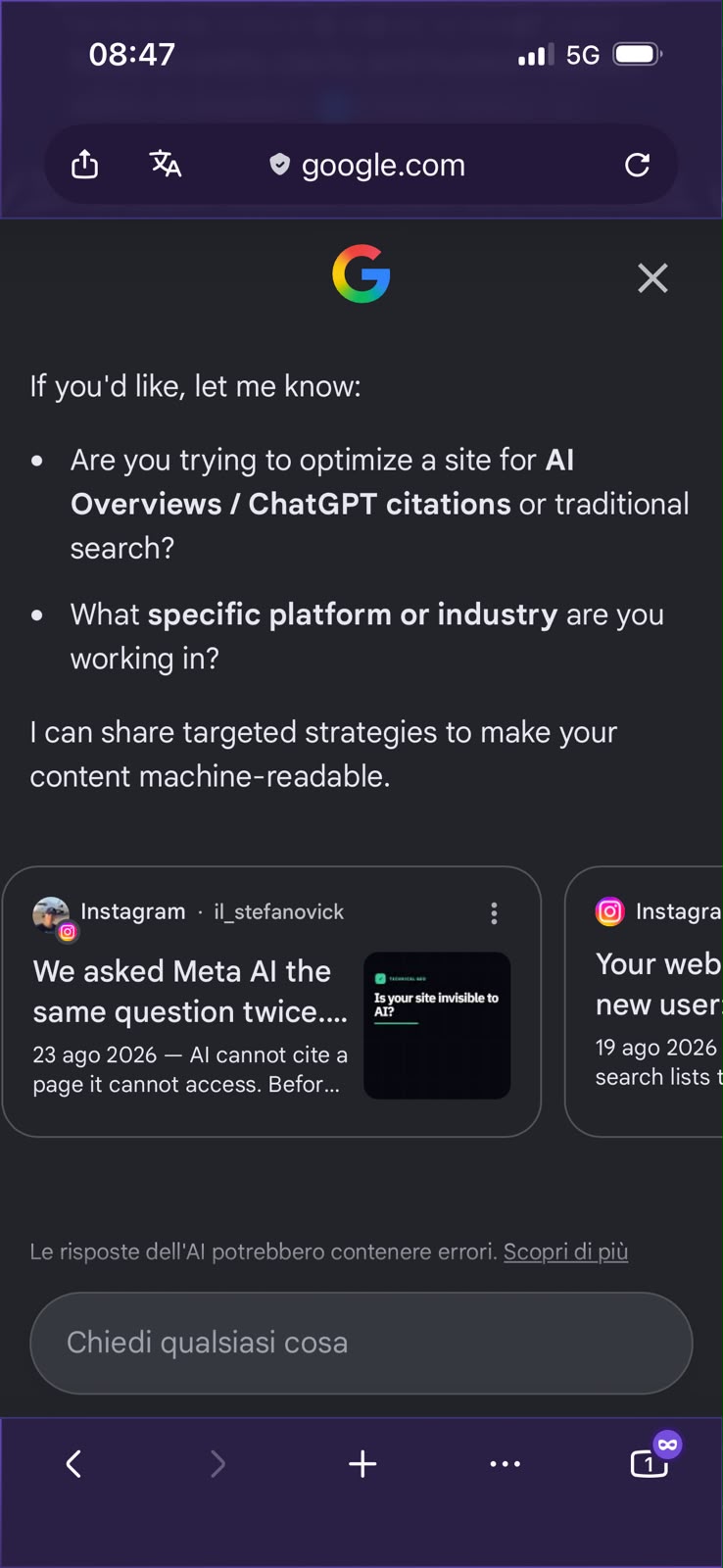
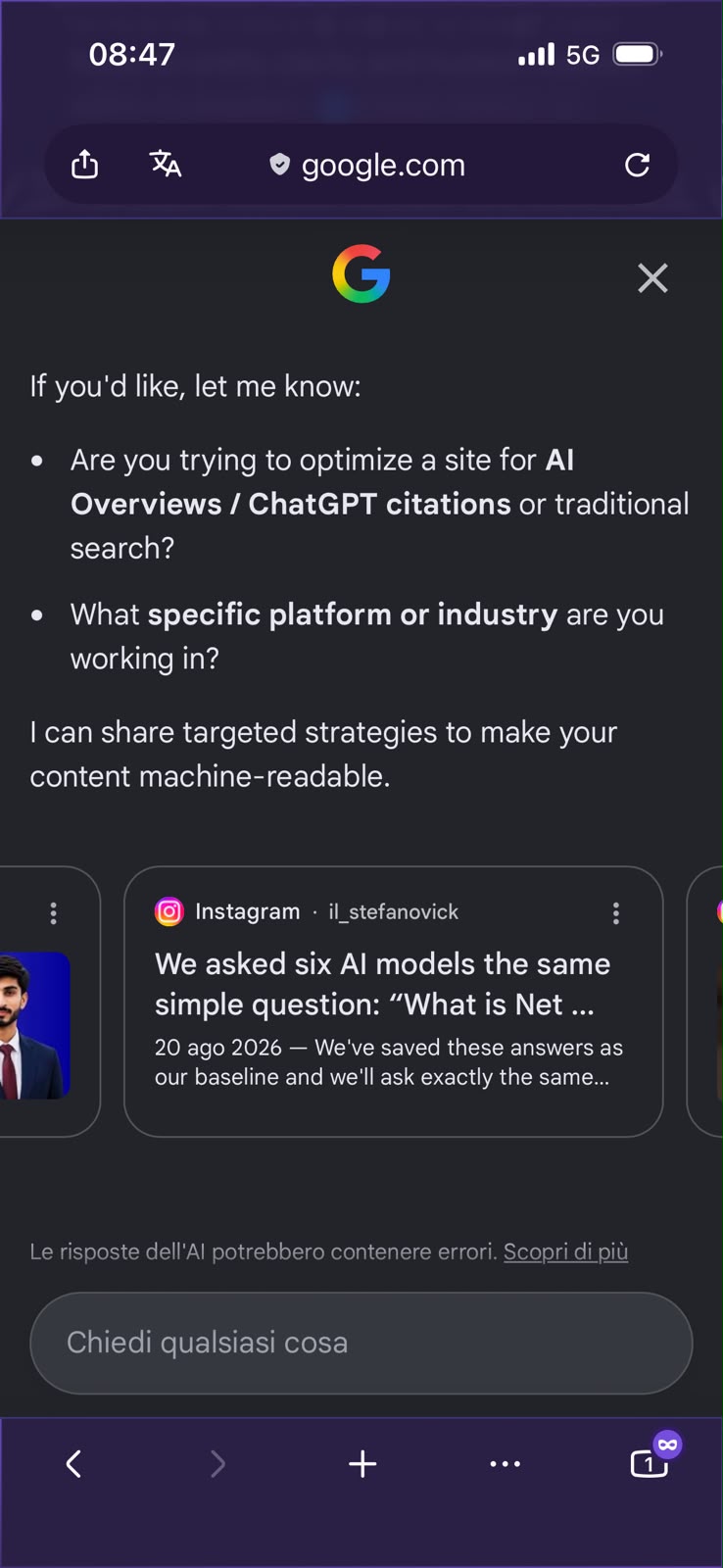
We also ran controlled experiments with multiple AI systems. On August 20, for example, we asked six different models exactly the same question: “What is Net Content SEO?” Three reconstructed the project reasonably well, while three either treated the name as a generic SEO expression or confidently invented a different meaning. We deliberately preserved those answers as a baseline rather than changing the question until the systems gave us the answer we wanted.
What we did during this period matters, but this article is not intended to be a step-by-step recipe. Some of those signals are obvious from looking at our public activity; others are part of experiments we are still running. What matters for this case study is the observable difference between the starting point and what Google shows today.
Twenty Days Later, the SERP Looks Completely Different
On August 27, we repeated the search.
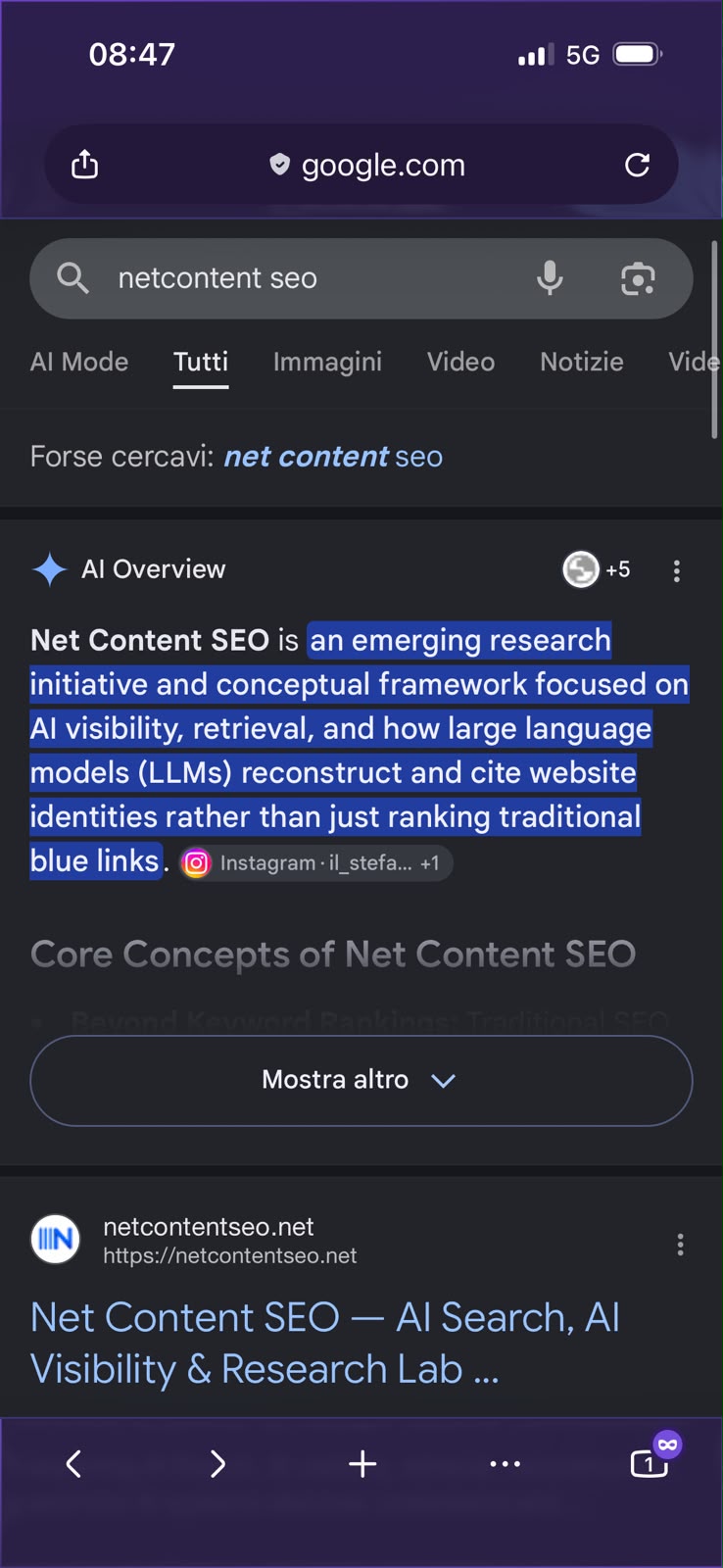
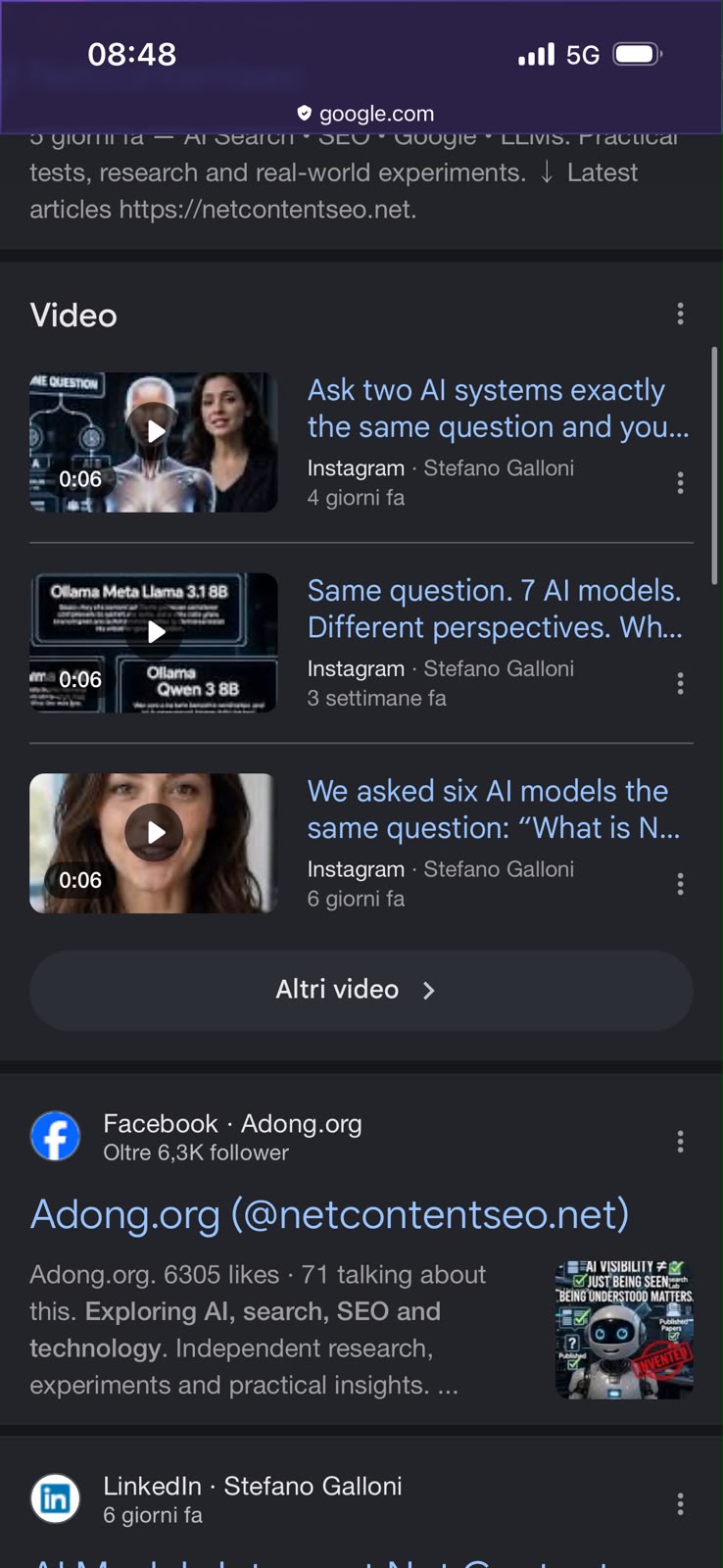
This time, NetContentSEO.net appears prominently as “Net Content SEO — AI Search, AI Visibility & Research Lab.” That alone would represent a significant change from the August 7 baseline.
But the organic result is not the most interesting part.
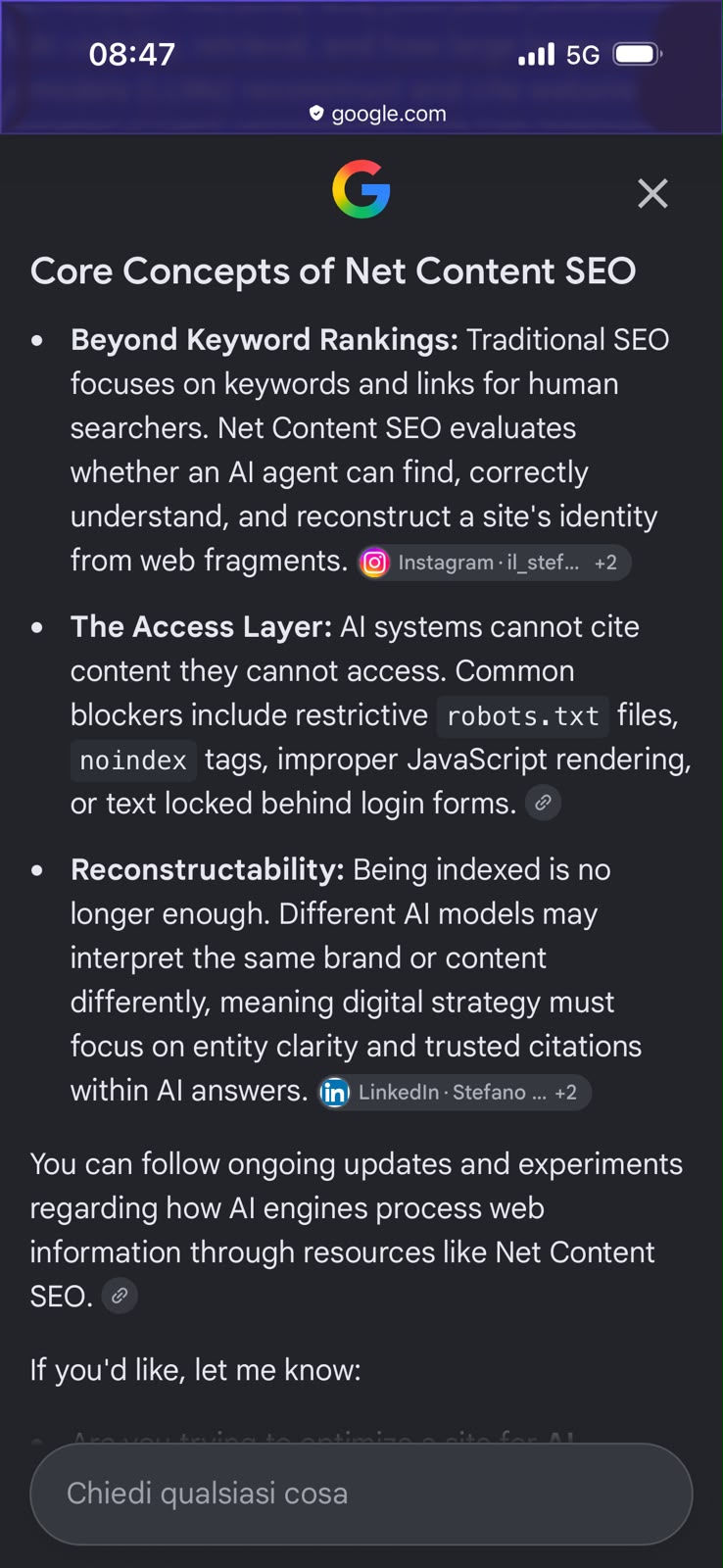
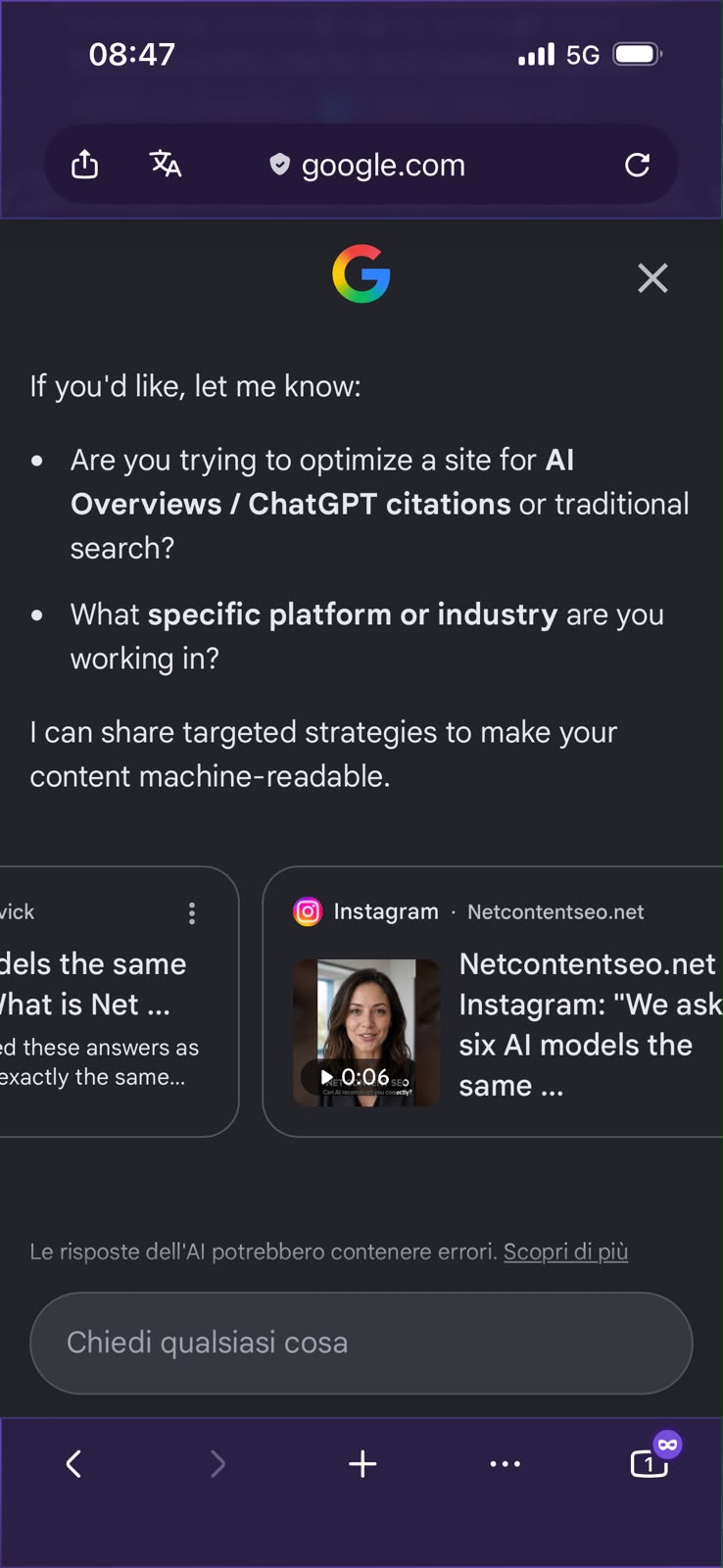
Google's AI Overview now describes Net Content SEO as an “emerging research initiative and conceptual framework focused on AI visibility, retrieval, and how large language models (LLMs) reconstruct and cite website identities rather than just ranking traditional blue links.”
That distinction is important.
Google is no longer merely matching three words. It is assembling an interpretation of the entity and connecting it with concepts that have repeatedly appeared around the project: AI visibility, retrieval, reconstruction, LLMs and citations.
Those relationships also correspond closely with the areas NetContentSEO has been publishing and researching publicly. The project's current methodology describes its work around generative search, retrieval, attribution and how AI systems reconstruct brands, authors and concepts, while recent experiments explicitly examine whether different AI systems can reconstruct the Net Content SEO entity correctly.
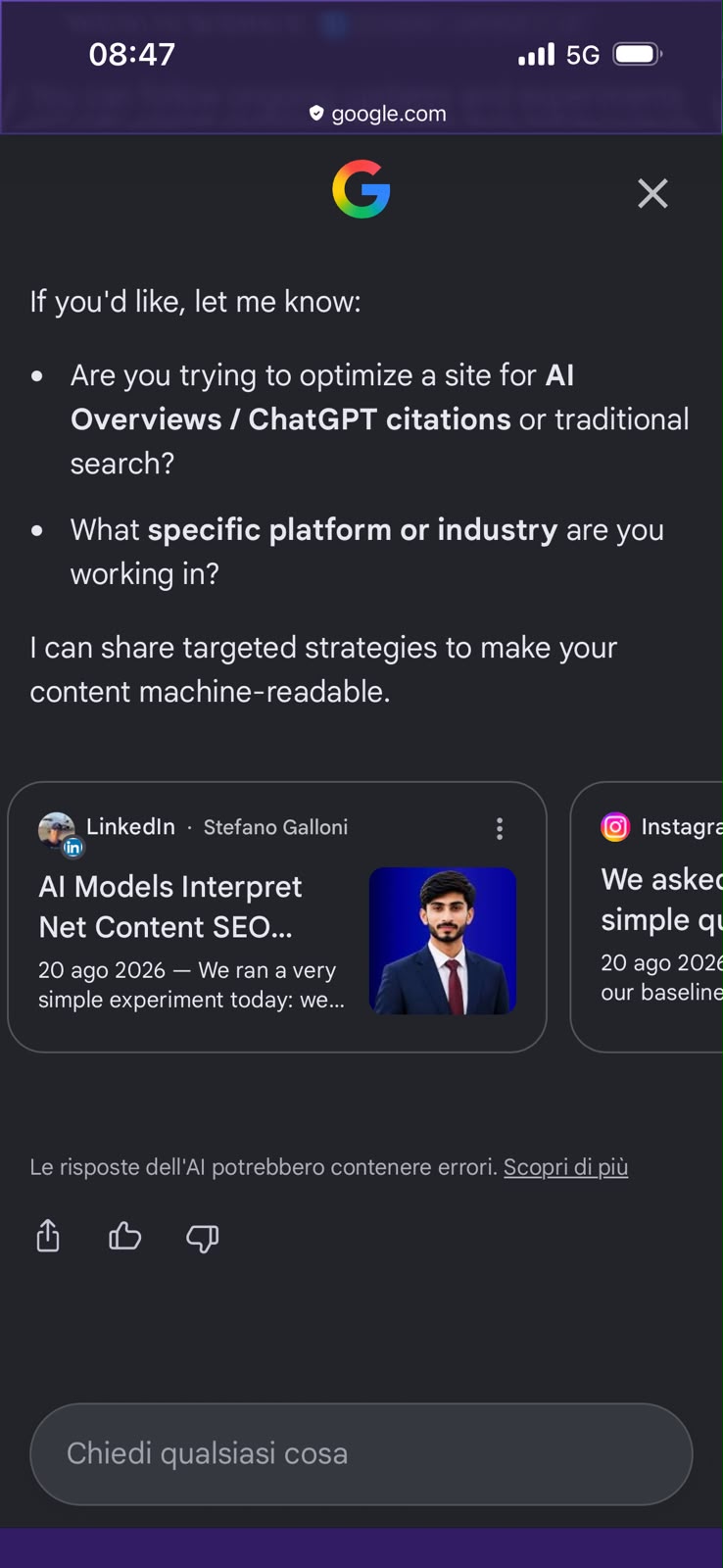
The change extends beyond the AI Overview. Google is surfacing the project's website, Instagram material, LinkedIn content and multiple videos associated with the same cluster of ideas. The screenshots below are particularly interesting because they show that the change is not confined to one traditional organic result.
[GALLERY — GOOGLE RESULTS AND AI OVERVIEW, AUGUST 27, 2026]
This Does Not Prove a Ranking Formula
There is an important limitation.
Twenty days of observations cannot establish a universal rule about Google, AI Overviews or entity recognition. We cannot look at this before-and-after comparison and claim that one particular action caused Google to change its interpretation. Search results are dynamic, Google's systems change continuously, and multiple signals may have contributed simultaneously.
That is exactly why we consider this a case study rather than a ranking-factor announcement.
But the observation itself is difficult to ignore.
On August 7, Google largely reconstructed “Net Content SEO” as a generic combination of content and SEO. On August 27, the same search produced an AI-generated description of a specific research initiative associated with AI visibility, retrieval, LLM reconstruction and citations — alongside a much broader footprint of results connected with that identity.
Same query. Same project. Less than three weeks between the screenshots.
The Experiment Is Not Finished
For us, the interesting question is no longer simply whether Net Content SEO can rank for its own name.
The more useful question is whether an entity can become sufficiently clear and consistent across the web that search and AI systems begin reconstructing its identity rather than guessing what its name probably means.
Over the coming weeks we will continue repeating the same searches and model tests, preserving the results rather than selectively reporting only the successful ones. Some systems will probably understand the project correctly. Others may continue to confuse it with generic content SEO. That disagreement is part of the experiment.
We are deliberately not publishing every detail of what we changed during these twenty days yet. We want more observations before separating coincidence, temporary effects and potentially repeatable signals.
If you're working on a similar AI visibility or entity-recognition problem and want to discuss the experiment or what we tested, you can contact us through Galloni.net/contact.
For now, the two sets of screenshots tell the story better than any visibility score could:
August 7: Google interpreted the words.
August 27: Google appears to understand the entity.