
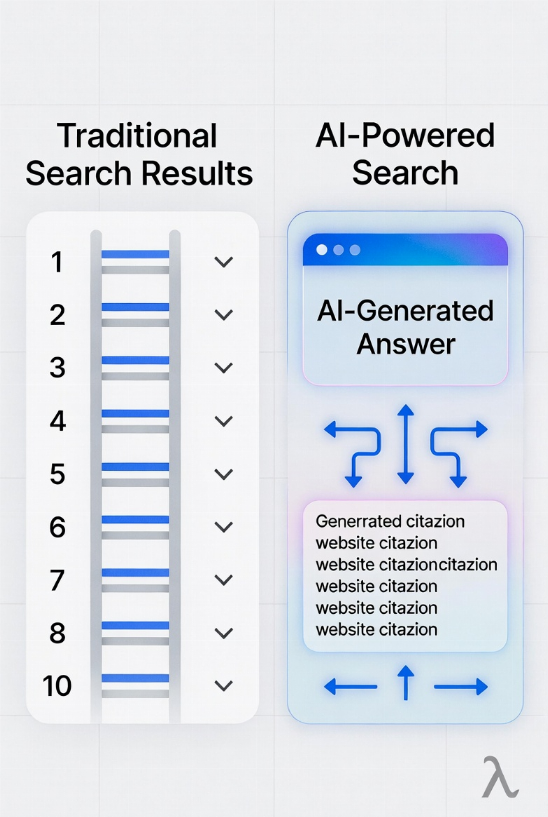
Early signals show AI Overview citations diverging from traditional rankings while Bing introduces new guidance for AI search visibility. The gap between ranking and AI citation continues to widen.
Early signals suggest something interesting may be happening between traditional rankings and AI-generated citations. Some recent industry observations indicate that the pages cited inside AI answers are not always the same pages ranking at the top of the organic results. For years SEO operated under a simple assumption: if a page ranked highly it would also be the most visible source in search. But as AI-generated answers expand across search experiences, that relationship may be shifting slightly. Several analysts are beginning to notice cases where AI systems reference sources that do not necessarily appear among the top ranking results for the same query. One possible explanation is how AI systems process queries internally. Instead of relying on a single ranking list, AI models often expand a query into multiple related intents and pull information from different documents that help complete the answer. That could mean the pool of possible citation sources is broader than the traditional top ten results. At the same time, there are indications that Bing may be adjusting how it frames AI search guidance for publishers, suggesting that the search ecosystem itself is still experimenting with how these systems surface and reference information. None of this necessarily means rankings are losing importance, but it may point to a gradual separation between ranking position and AI citation visibility. If the pattern continues, SEO could be entering a phase where appearing in AI answers follows slightly different dynamics than appearing in the classic results page, something many in the industry are now watching closely.