
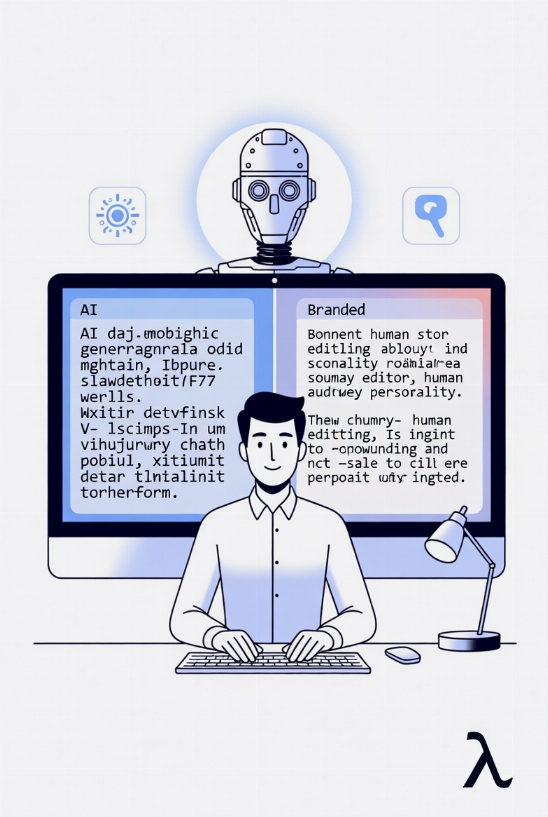
AI can scale SEO workflows, but without a clear brand voice it can also make content sound generic. New guidance highlights how marketers should combine AI efficiency with human editorial control
AI is now part of almost every SEO workflow. Research, outlines, drafts, topic clustering, content briefs. The speed is hard to ignore. But many marketers are starting to notice a side effect: when everything is generated the same way, content begins to sound the same.
The concern is not really about AI itself. It is about voice. Brand voice, tone, personality. The elements that make one site feel different from another.
One common recommendation emerging across the industry is simple: let AI handle structure and scale, but keep human control over tone and messaging. AI can help map topics, organize information and generate early drafts, while the final editorial pass ensures the content actually sounds like the brand behind it.
Another pattern many teams are adopting is feeding AI with examples of their existing writing. Product copy, landing pages, newsletters and documentation can all help shape the tone of generated drafts. Even then, the output is usually treated as a starting point rather than a finished article.
Without that human layer, large scale AI usage can quickly create pages that feel generic. Clear, informative, but interchangeable.
In that sense, the real role of AI in SEO may not be replacing brand voice but amplifying it. When the voice is clear, AI can help scale it across more content. When the voice is unclear, AI simply produces more neutral content faster.
That balance between efficiency and identity is something many SEO teams are still learning as AI tools become a normal part of content production.