SEO tools used to have a fairly straightforward job. Give us keywords, rankings, competitors and backlinks, and we would figure out what to do with them. In 2026, that job has become much more complicated. Google is still enormously important, but rankings are no longer the only place where visibility happens. AI Overviews are taking space inside search results, while ChatGPT, Gemini, Perplexity and other answer engines are creating another discovery layer that SEO teams are only beginning to understand.
That was the main reason we wanted to spend some time with Serpstat. We were given temporary access to the platform and used the opportunity to look beyond the usual feature checklist. We wanted to see whether Serpstat still feels primarily like a traditional SEO suite or whether it is actually adapting to the way search is changing.
There is one limitation worth explaining immediately. Our access lasted fifteen days. That is enough time to explore the platform, analyse domains, work with keyword and competitor data, inspect backlinks, look at audits and experiment with newer features. It is not enough time to claim that a tool improved rankings, increased traffic or generated more AI citations. We would rather say that clearly than manufacture a case study from a test that was never long enough to support one.
What we found, however, was interesting enough that we decided to write about Serpstat anyway.
There is a lot more here than keyword research
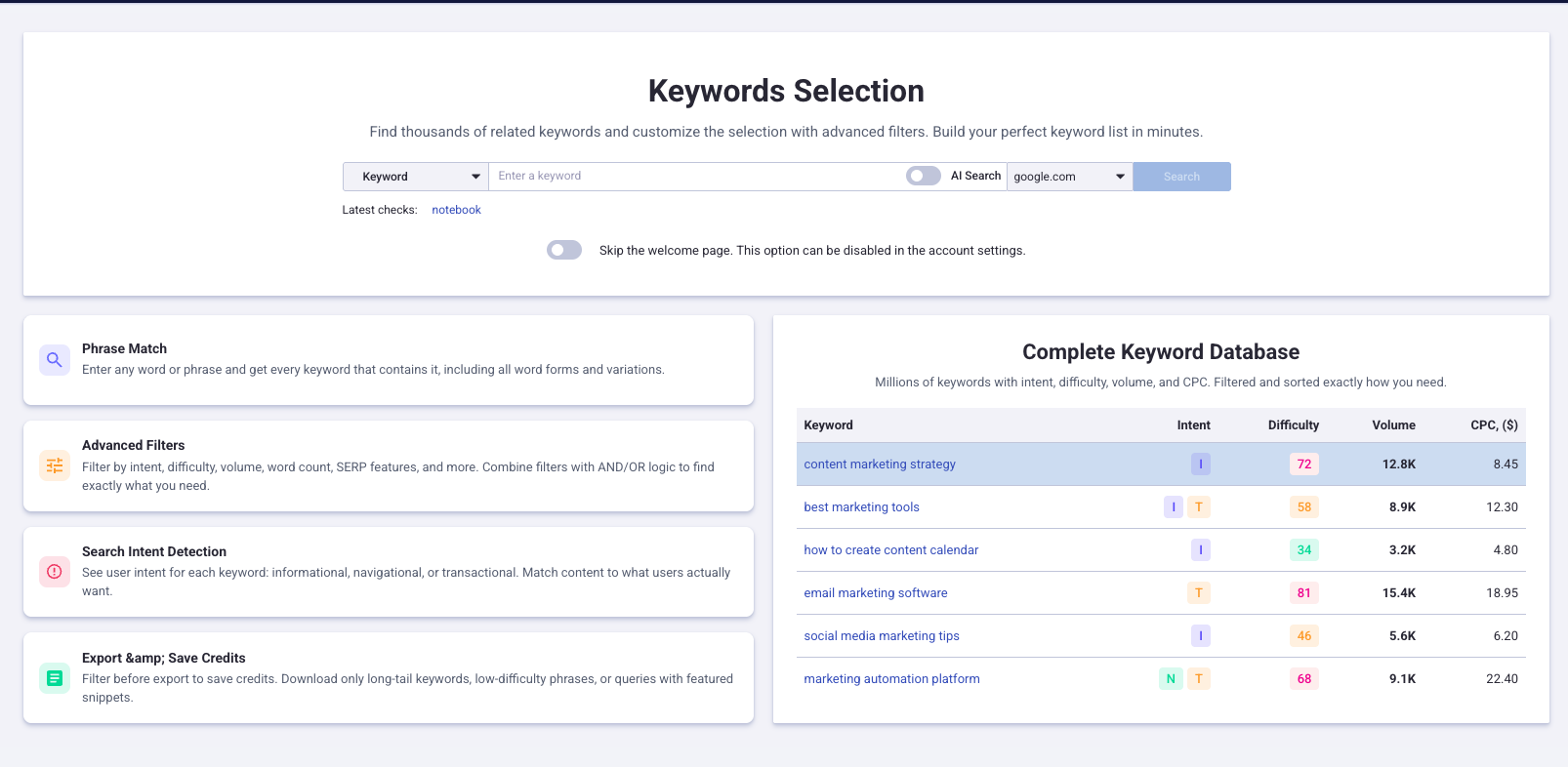
The first impression Serpstat gives today is simply how much territory the platform covers. Site Analysis opens the door to organic keywords, competitors, keyword gaps, top pages and other views of a domain. From there you can move into dedicated keyword research, backlink analysis, rank tracking, batch analysis, technical auditing, trends, clustering, AI content tools and reporting.
We tested parts of this workflow using sites from our own publishing ecosystem, including <a href="https://imoond.com">IMOOND</a> and <a href="https://ai.lmbda.com">LMBDA</a>. We deliberately preferred smaller editorial projects to giant domains because they are closer to the kind of sites where we actually have to make decisions. Running an SEO tool against an enormous established domain will almost always produce impressive amounts of data. A smaller publisher is a better test of whether that data can lead somewhere useful.
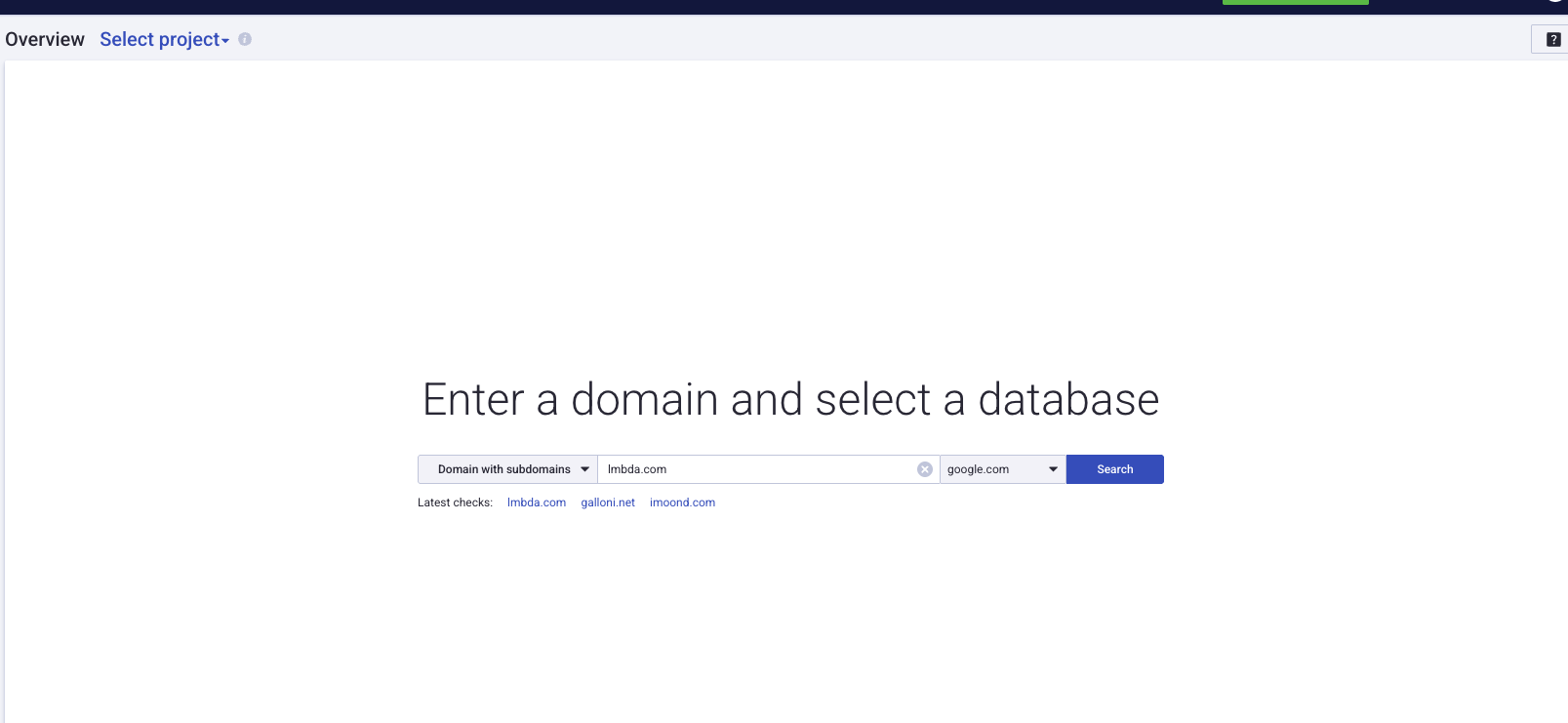
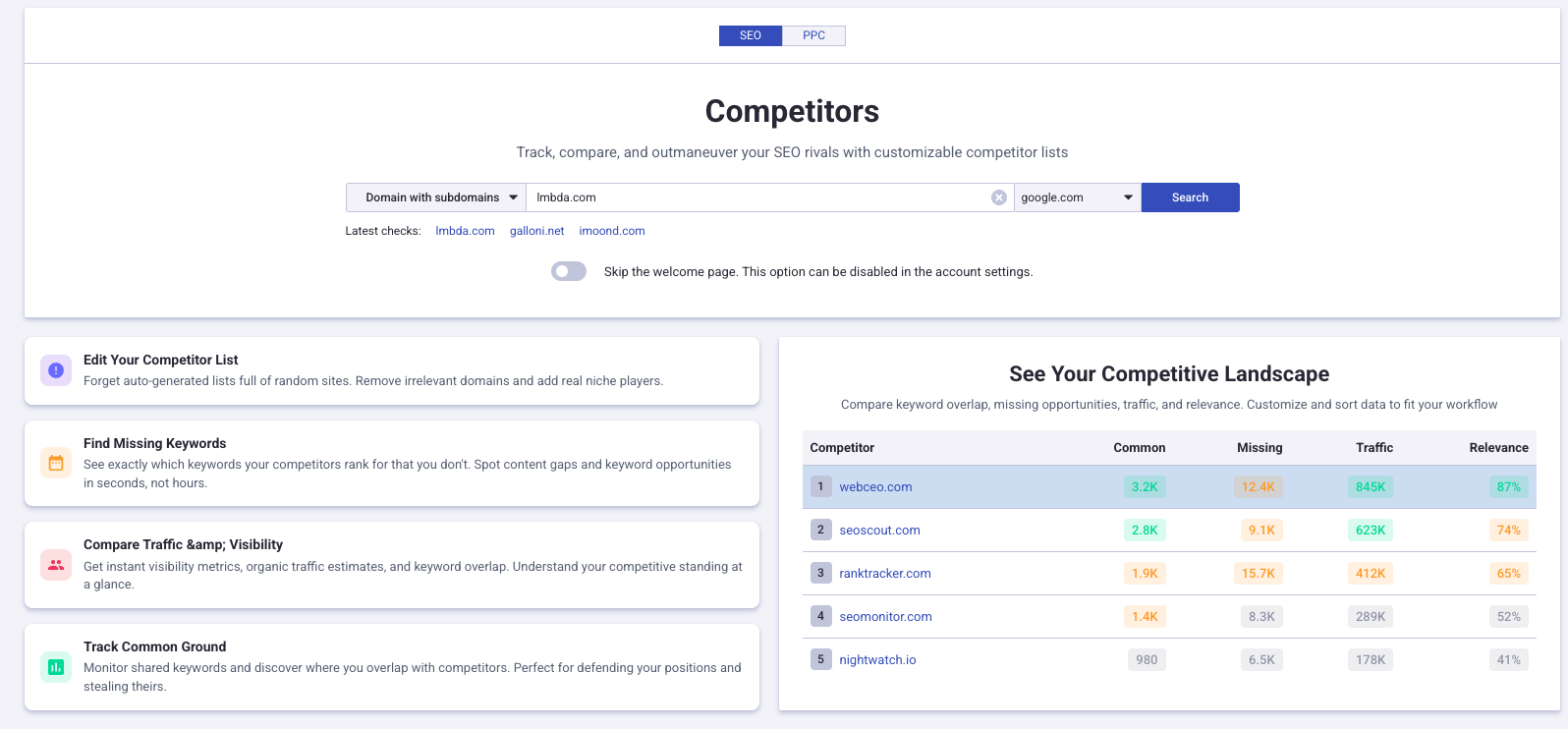
Site Analysis is the natural starting point. The overview gives you the familiar snapshot of a domain, but the interesting part comes when you start moving away from the headline metrics. A list of organic keywords can lead you towards the pages generating that visibility. Competitor analysis can expose sites occupying similar search territory, while Keyword Gap can reveal queries where those competitors appear and your own site does not.
That progression is more valuable than any isolated visibility score. Knowing that a site has gained or lost visibility is useful, but it immediately creates another question: why? Which URLs changed? Which queries were involved? Did competitors move at the same time? Is there an obvious piece of content missing?
A good SEO tool should help you move through those questions without constantly starting the investigation again somewhere else. Serpstat does a good job of connecting many of those steps.
Competitor research is useful when it produces editorial decisions
Competitor analysis is one of those SEO features that can become meaningless very quickly. Knowing that another domain has more keywords than yours doesn't necessarily tell you what to do on Monday morning.
The more useful approach is to move from the domain towards individual topics and pages. This is where Serpstat's combination of competitor research, top pages, keyword analysis and gap analysis becomes much more practical.
For a site such as <a href="https://imoond.com">IMOOND</a>, for example, we are less interested in discovering that another science, history or travel publisher has greater overall visibility. We want to know what that publisher is covering successfully that we aren't, whether an existing IMOOND article is missing part of the search intent, or whether there is an entire related topic that deserves its own article.
That is a small distinction, but an important one. Keyword databases are everywhere. Turning keyword data into an editorial decision is harder.
Serpstat's traditional keyword research tools are still central to the platform, and we don't think AI search has made that kind of research obsolete. Search queries remain an extraordinary record of the language people use and the problems they are trying to solve. What has become less convincing is the old habit of treating search volume as an editorial strategy by itself.
A keyword with volume isn't automatically a good article. Ten similar keywords don't automatically require ten pages. Sometimes they describe the same intent in slightly different language, and sometimes two apparently similar queries actually deserve completely different answers.
That is why we found the clustering side of the platform particularly interesting. Clustering gives you another way of looking at the relationship between queries rather than simply sorting them by volume. For publishers trying to build coherent topic coverage instead of accumulating hundreds of loosely connected articles, that is much closer to the problem we are actually trying to solve.
The traditional SEO tools still matter
It would be easy to spend the rest of this article talking about AI, because AI Search is the fashionable part of SEO in 2026. But one thing our own experiments have repeatedly reminded us is that the boring parts of SEO have not disappeared.
Google still needs to discover pages. Crawlers still need to access them. Internal links still matter. Templates can still introduce technical problems across hundreds of URLs. A broken canonical or indexing problem does not become less important because someone has added “GEO” to the strategy deck.
Serpstat's Site Audit therefore still has a very obvious place in the platform. Technical audit tools are most useful when they help reduce a large website to a manageable set of problems and priorities. The objective isn't to achieve a pretty score; it is to find something that could actually be preventing pages from performing as expected.
Rank tracking belongs in the same category. There is currently a tendency to talk about AI visibility as though conventional rankings are about to become irrelevant. We think that is premature. Rankings still provide a useful observational layer when you change a page, restructure internal links, consolidate content or expand a topic.
If a URL moves after a change, that doesn't automatically prove the change caused it. SEO has never been that simple. But tracking provides evidence, and useful SEO work tends to come from accumulating evidence rather than searching for one metric that explains everything.
Backlink analysis fits naturally into the same investigative workflow. Again, the number itself isn't particularly interesting. What matters is understanding where authority may be coming from, how competitors are earning links and whether changes in a site's link profile coincide with other movements you are observing.
What Serpstat does reasonably well is keep these different investigations close enough that the platform feels less like a collection of unrelated utilities and more like a working environment.
Where Serpstat becomes more interesting to us: AI Search
This is the area we were particularly curious about because it overlaps directly with the work we have been doing at <a href="https://netcontentseo.net">NetContentSEO</a>.
SEO visibility is becoming harder to define. For years, the basic model was simple: a page gets indexed, ranks for queries and receives clicks. That chain was never perfect, but everyone understood it.
AI systems complicate it considerably. A page can be indexed without being retrieved. A source can be retrieved without being cited. A brand can appear in an answer without receiving a link. A website with modest traditional search traffic can potentially become a useful source for an answer engine, while another domain with strong Google visibility may rarely appear in generated answers.
Serpstat has started bringing this new layer into the same environment as conventional SEO through features related to AI Overviews and LLM visibility. That direction interests us much more than seeing another keyword metric added to an already crowded dashboard.
It also raises harder questions.
AI visibility is still a young measurement category. When a platform says that a brand is visible in AI, we need to understand what that actually means. Which models were tested? Which prompts were used? How often were those prompts checked? Was the brand mentioned, recommended or cited? Did the answer include a clickable source? Did the result remain stable when the same question was asked again?
Those details matter because AI answers are not conventional SERPs. They can change between runs, between models and sometimes between users. Measuring them as though they were ten blue links with a new interface would be a mistake.
This is an area where we would have liked considerably more testing time. Not because the functionality wasn't interesting, but because fifteen days isn't enough to observe meaningful long-term changes in AI visibility any more than it is enough to establish long-term SEO performance.
A proper experiment would require a baseline, a defined set of prompts and pages, documented changes to the sites and repeated measurements over several weeks or months. That is something we would genuinely like to test in the future.
Fifteen days with Serpstat was enough to form an opinion, not enough to manufacture a success story
This distinction is important to us.
We could easily finish this review with a percentage increase, a dramatic graph and a sentence claiming that Serpstat transformed one of our websites. It would also be meaningless.
Our temporary access was long enough to understand the product and test a useful part of its workflow. It was long enough to see that Serpstat has grown considerably beyond the keyword research platform some SEOs may still remember. It was also long enough to identify features we would use again, particularly when moving between domain research, competitors, content opportunities, technical analysis and the emerging AI visibility layer.
It was not long enough to establish cause and effect.
That doesn't make the test less useful. In fact, it is one of the reasons we decided to publish this article. Serpstat gave us access to explore the platform, and our experience with the company was positive enough that we preferred to give the product a proper look rather than produce a superficial “top ten features” review.
If we had longer access, the next step would be very different. We would select a small group of real sites, record their Google and AI visibility, use Serpstat to identify specific opportunities, make only documented changes and follow what happens over time. Some experiments would probably work and others wouldn't. The failures might ultimately teach us more than the wins.
That would be a real case study.
Serpstat makes more sense when SEO is treated as investigation
After testing it, we don't think the best way to describe Serpstat in 2026 is simply as a keyword research tool, a rank tracker or even an all-in-one SEO platform. Those descriptions are technically correct, but they miss what makes a suite like this useful.
SEO is increasingly an investigation.
A page loses visibility and you need to understand whether the problem is technical, competitive or editorial. A competitor appears for a group of queries and you need to determine whether you have a content gap or simply a weaker page. An article is indexed but barely visible. Another performs well in Google but seems absent from AI-generated answers. A brand begins appearing in AI responses and you want to understand why.
No single metric answers those questions.
The value of having site analysis, keyword research, competitor data, backlinks, audits, tracking, clustering and emerging AI visibility tools in one environment is that you can approach the same problem from several directions.
Serpstat isn't going to make the decisions for you, and it shouldn't. The interesting part is whether it gives you enough evidence to make better ones.
Our fifteen-day test wasn't long enough to tell us what would happen after three months of using the platform. It was long enough to make us interested in finding out.
And in a market full of SEO tools promising definitive answers to questions that are becoming less definitive every year, that is probably a better conclusion than another perfect score.