
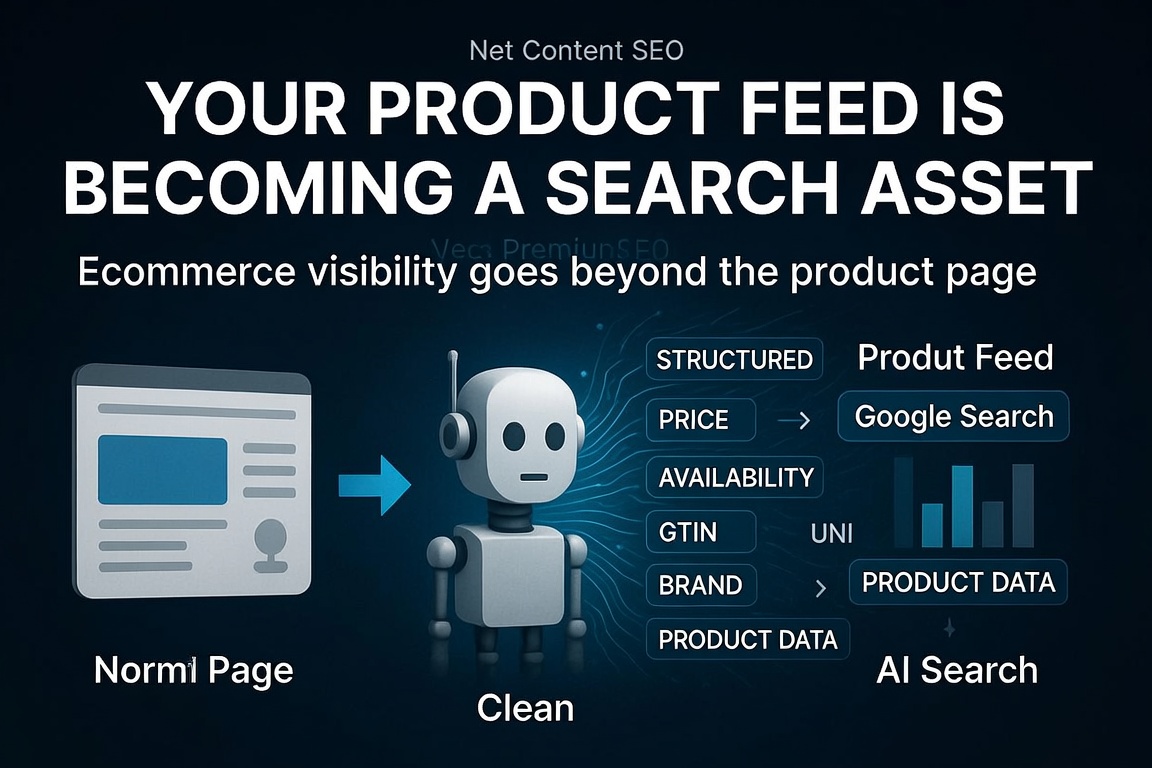
An ecommerce product page is no longer the only version of a product that machines need to understand.
Google's recent guidance for its generative AI search features reinforces something ecommerce SEOs should already be watching closely: Merchant Center data remains important for product visibility, alongside the information Google can understand directly from webpages.
Google's broader AI optimization guidance also makes an important point: the fundamentals haven't suddenly disappeared. Existing SEO best practices still apply to AI Overviews and AI Mode, while shopping-specific data gives Google additional structured information about products.
Shopify's latest data adds an interesting commercial signal. It found that AI-referred shoppers converted at twice the rate when AI systems used structured Shopify Catalog data rather than scraped or third-party product feeds.
That doesn't mean product feeds replace product pages.
It means the product itself increasingly needs to be understandable outside the page.
For ecommerce SEO, clean structured product data isn't housekeeping anymore. It's becoming part of search distribution.
Further reading: Google's latest Search documentation updates · Shopify's Q2 AI Search data