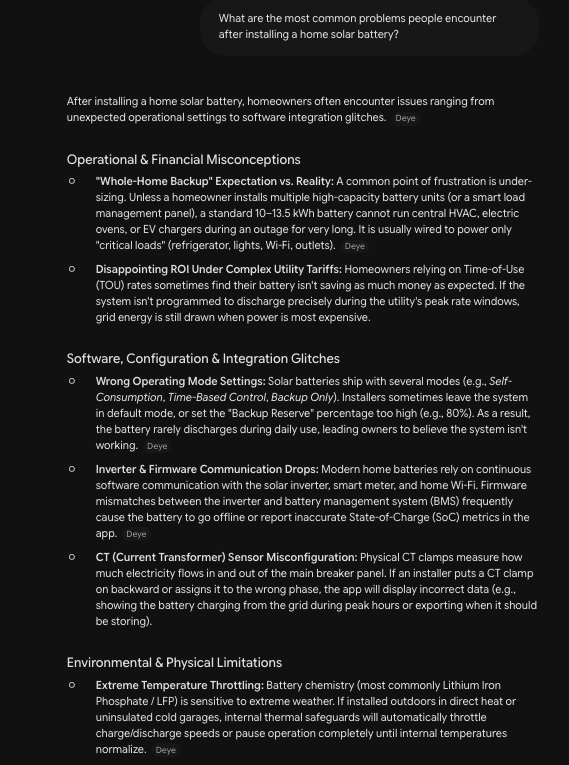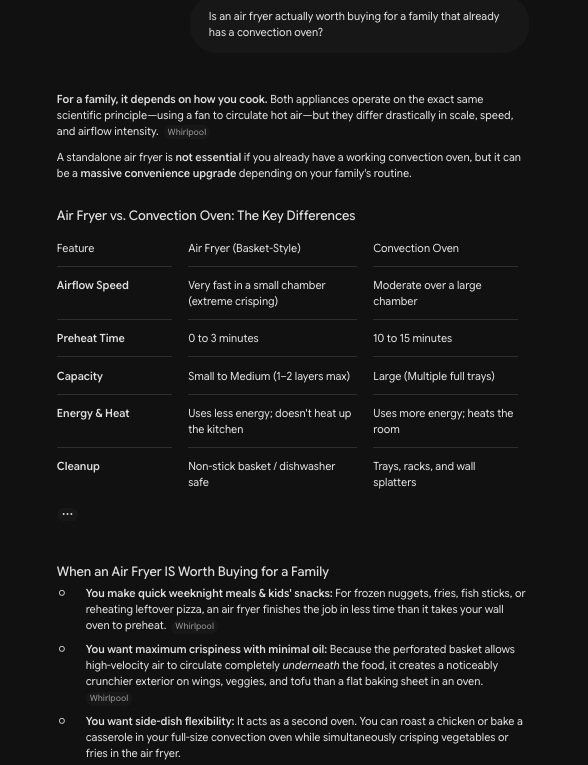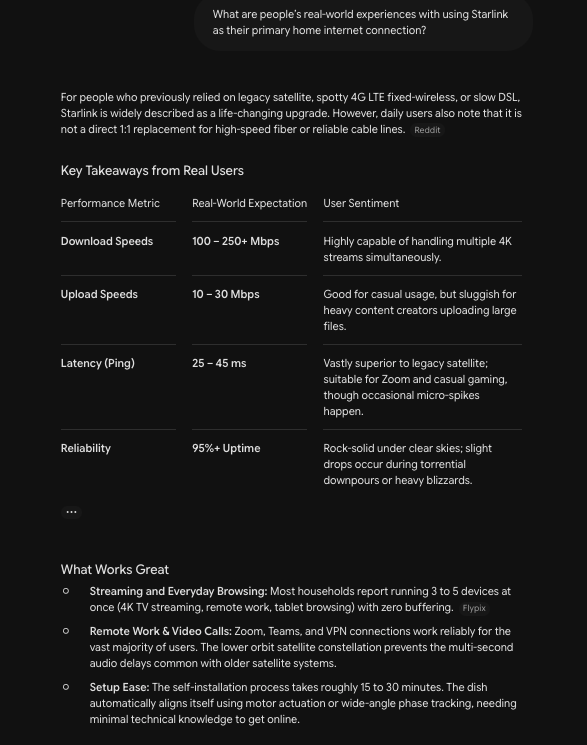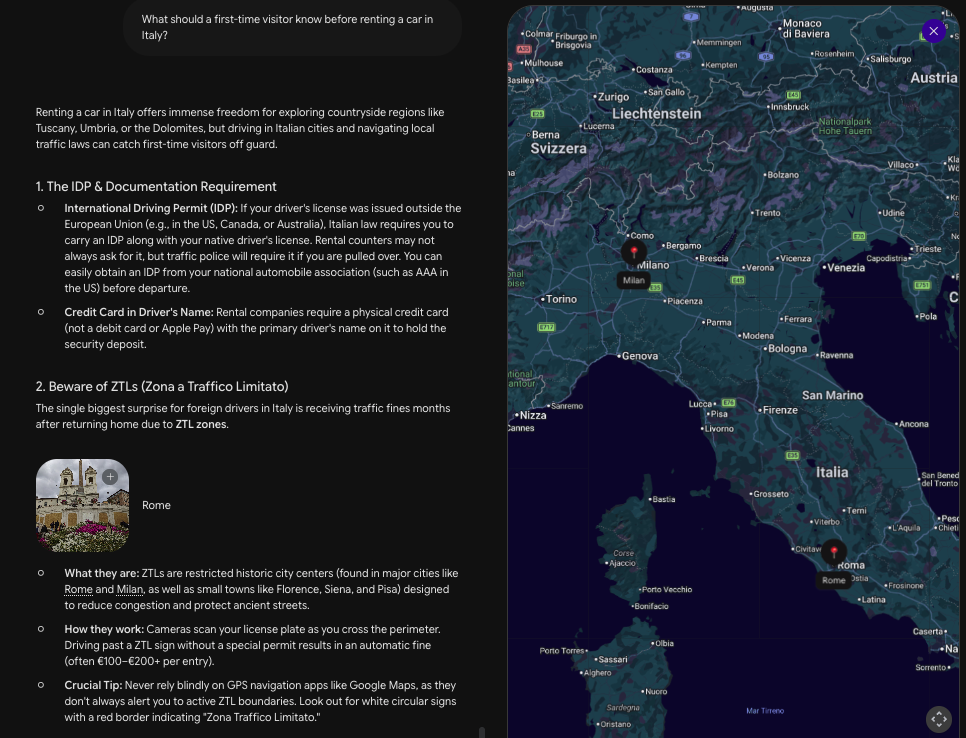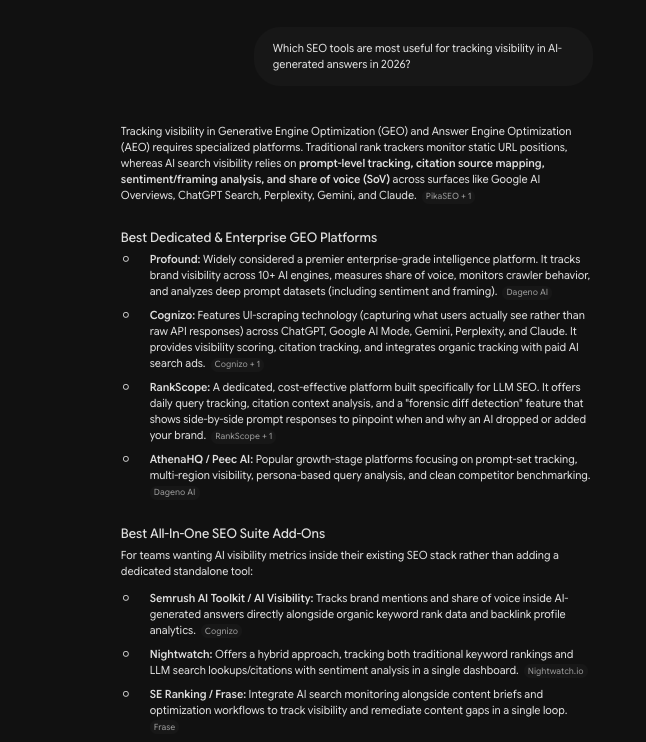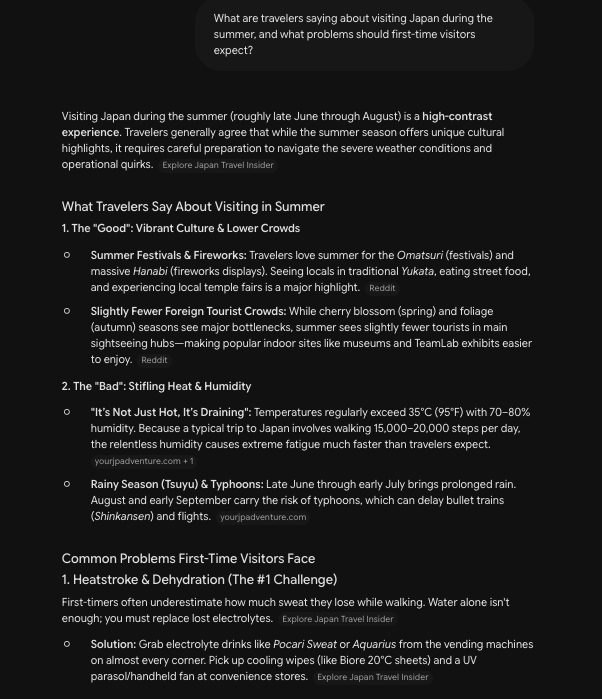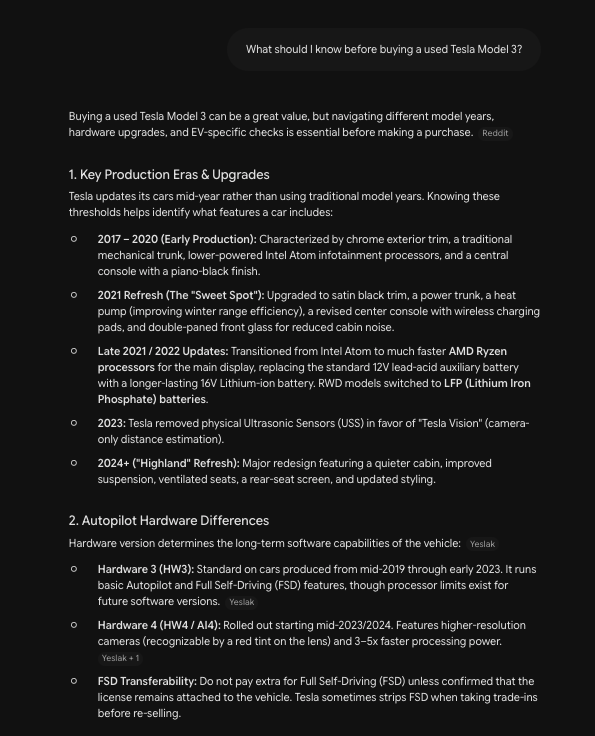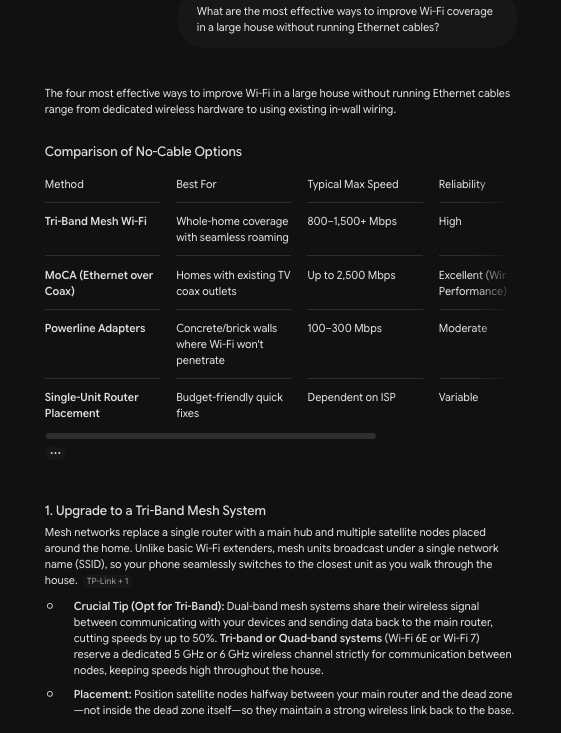
We repeated our 20-query AI Search Lab experiment on Gemini using exactly the same questions previously tested on ChatGPT. Reddit appeared again, but the source patterns were noticeably different.
After testing 20 identical queries on ChatGPT, we wanted to answer the obvious next question: what happens if we ask another AI system exactly the same things?
So we repeated the experiment with Gemini.
Nothing about the questions was changed. We used the same 20 queries published in our original methodology, covering products, technology, travel, software, consumer problems and AI search itself.
This matters because we weren't trying to find questions that would make Gemini cite Reddit. We had already chosen and published the queries before running this second test.
Our original experiment was designed around a simple question: does ChatGPT still rely heavily on Reddit as a source?
The ChatGPT results surprised us. Reddit was still present, particularly for questions involving real-world experiences and community opinions, but considerably less dominant than we expected.
Gemini made the experiment more interesting.
Because once we asked the same questions to a second system, this stopped being only a test about Reddit.
It became a small test of how two AI systems see the same web.
Reddit is still there
Gemini did use Reddit.
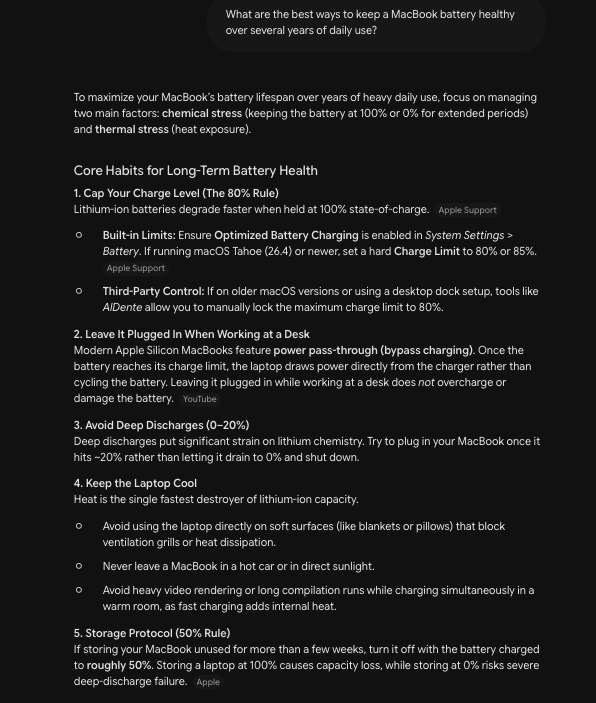
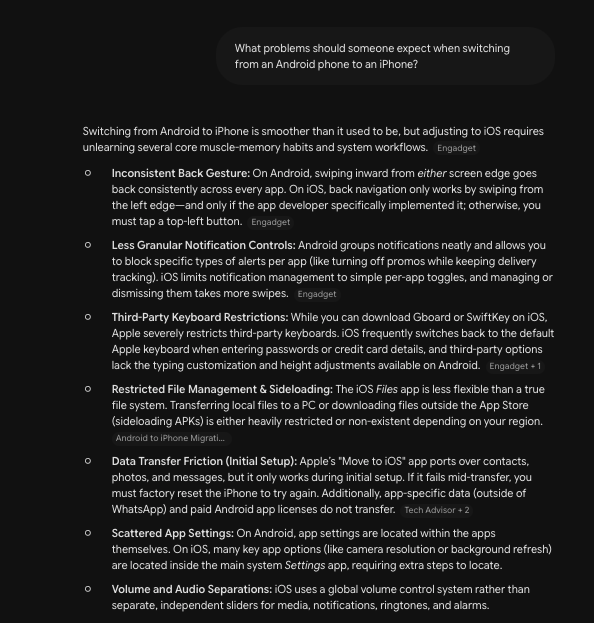
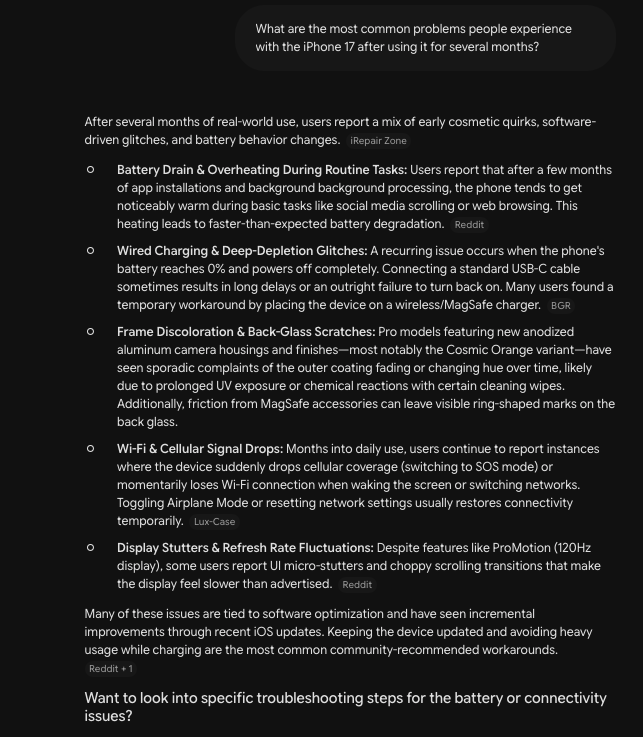
It appeared visibly in several answers, including questions about iPhone problems, buying a used Tesla Model 3, travelling in Japan and using Starlink as a primary internet connection.
That is important because it would be wrong to conclude that Gemini simply ignores Reddit.
It doesn't.
But Reddit was far from being the default source behind every answer.
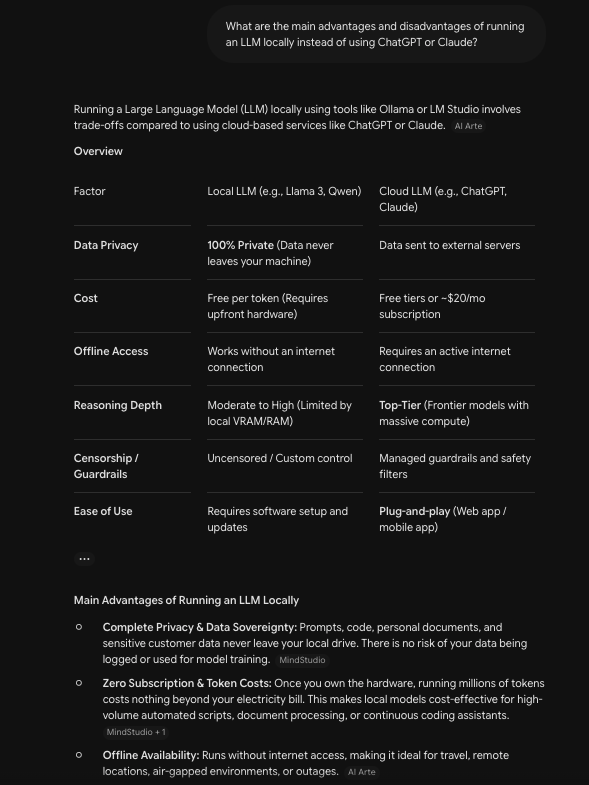
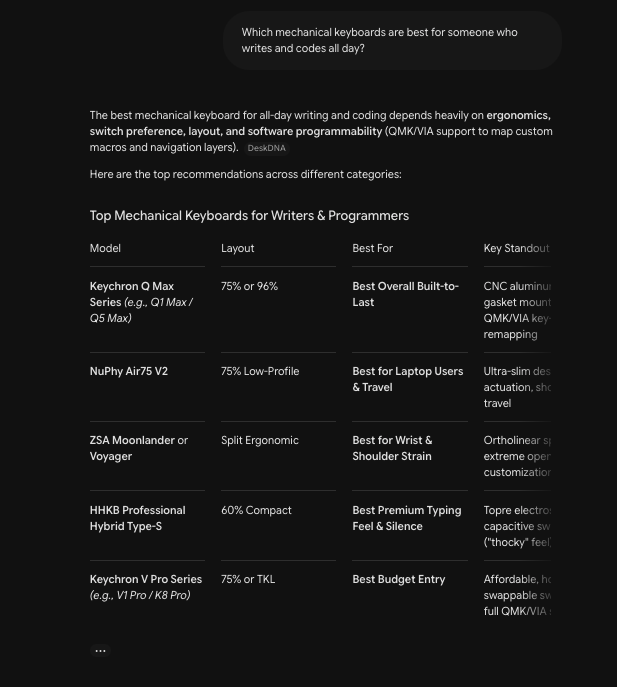
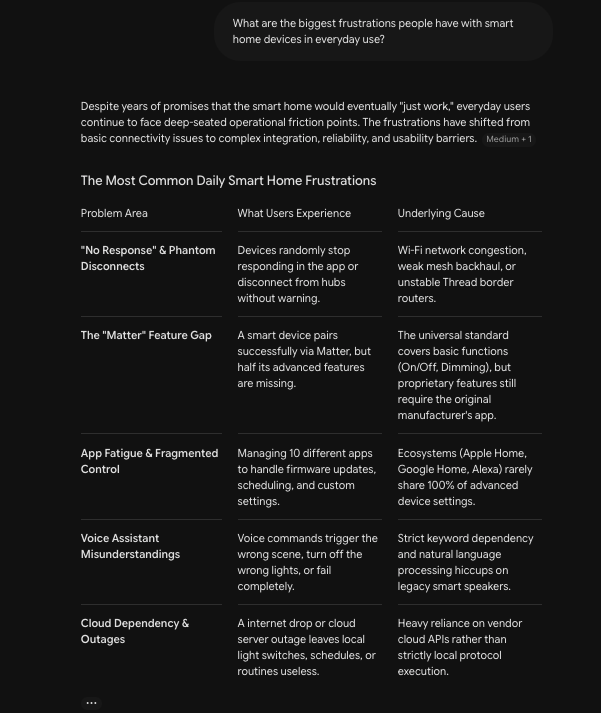
For many of the other questions, Gemini instead surfaced specialist websites, manufacturers, technology publications, product sites and other sources.
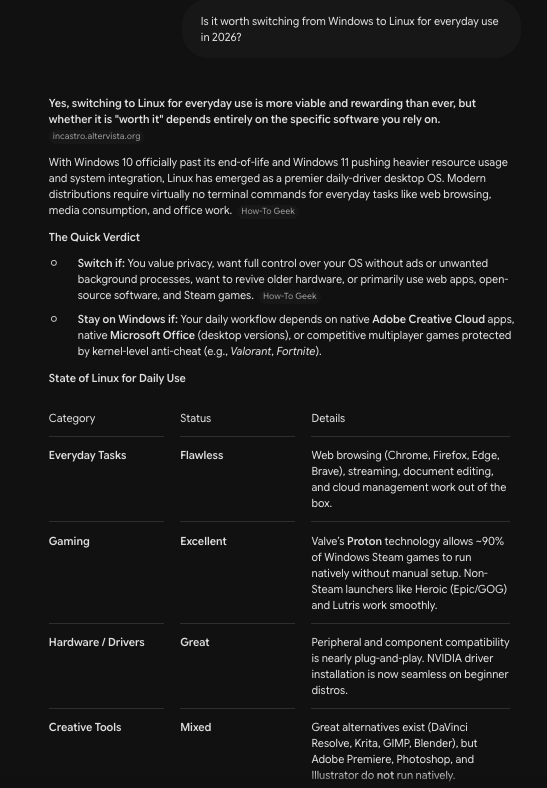
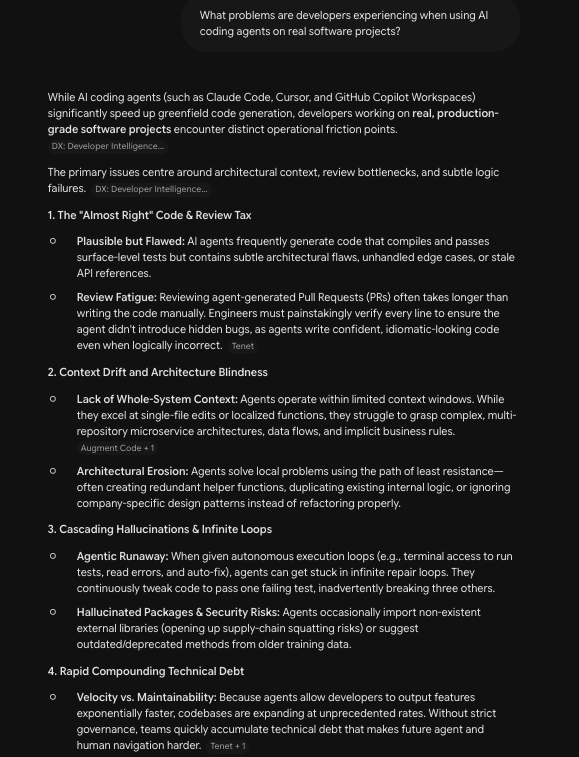
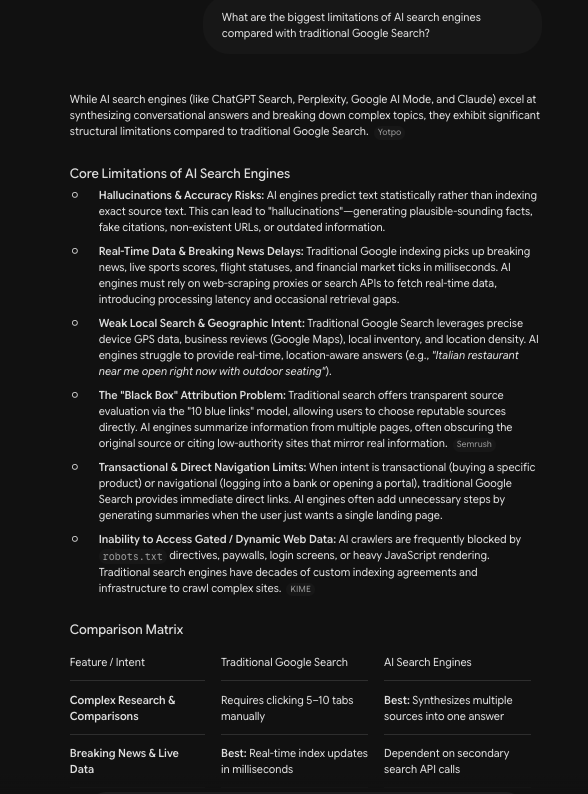
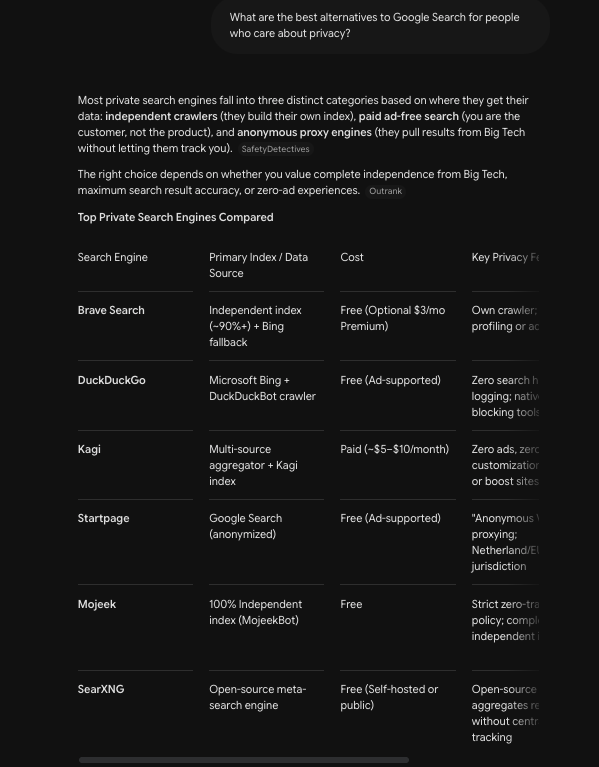
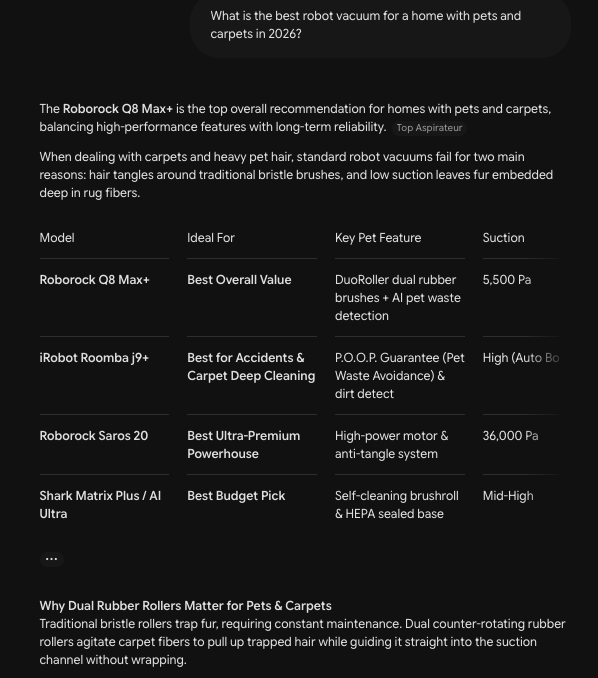
The robot vacuum query referenced Top Aspirateur. The Linux question surfaced sources such as How-To Geek. Privacy search alternatives brought in sources including SafetyDetectives and Outrank. Questions about AI coding agents referenced developer and technology sources rather than relying primarily on community discussions.
The pattern changed depending on the question.
And that may be more interesting than the Reddit count itself.
Same question, different information ecosystem
ChatGPT and Gemini weren't simply producing different wording around the same collection of sources.
They often appeared to be reaching into different parts of the web.
For example, questions involving practical consumer experiences sometimes pushed both systems toward community-generated information. Other queries pushed Gemini toward specialist publishers, manufacturers or niche websites.
That suggests something important for GEO.
There may not be one universal collection of websites that are "good for AI."
A source can be highly visible to one AI system and barely visible to another.
That sounds obvious until you think about what it means for the idea of optimizing for AI visibility.
If ChatGPT, Gemini and eventually other systems retrieve different documents for the same question, then asking whether a website "ranks in AI" becomes almost meaningless without specifying which AI system, which query and when the test was performed.
Our small experiment also matches a much larger uncertainty
We're deliberately not presenting 20 queries as proof of how Gemini works globally.
They're not.
Twenty queries are an experiment, not a statistically representative map of AI search.
But external datasets show why this question deserves more investigation. One recent dataset covering thousands of prompts measured Reddit appearing in 2.6% of Gemini responses versus 7.3% for ChatGPT, although different studies using different query sets have produced dramatically different results.
That's actually part of the problem.
Another recent study found Gemini citing sources in only 41% of answers in its particular dataset, while other studies have reported very different citation patterns.
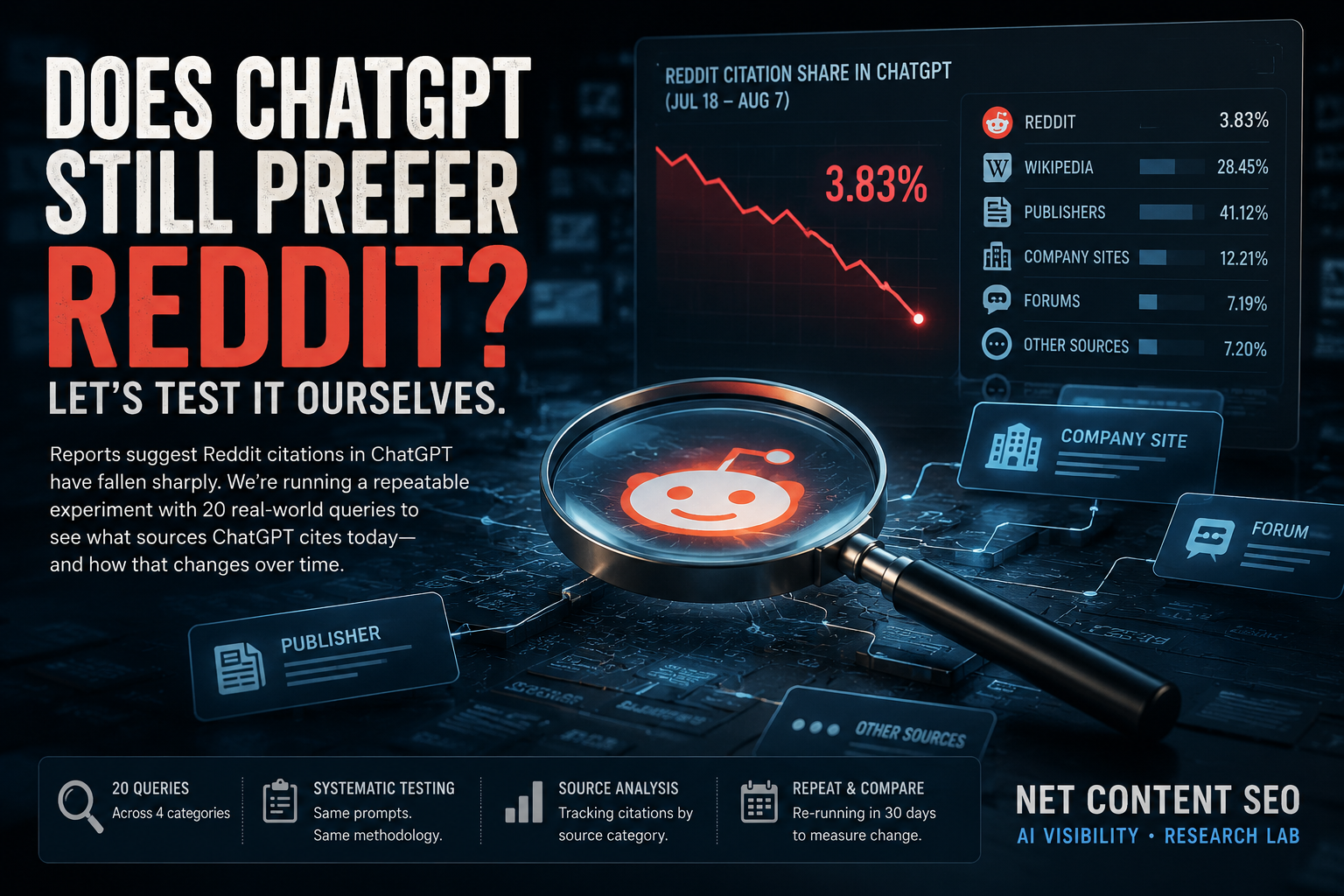
Meanwhile, the current discussion around Reddit itself is moving quickly. Axios reported this week that Promptwatch measured Reddit's average share of ChatGPT Search citations falling to 3.83% between July 18 and August 7. The cause remains unclear.
So perhaps the most useful lesson isn't a percentage.
It's the volatility.
GEO may be more fragmented than SEO
Traditional SEO gave us a relatively understandable target.
Google had an index. A query produced a SERP. Rankings changed, personalization existed and algorithms evolved, but we were largely observing the same search ecosystem.
AI search looks different.
The answer may depend on the model, retrieval system, available indexes, query interpretation, source accessibility and potentially even the moment when the question is asked.
Two users can ask essentially the same question to two different AI systems and receive not only different answers, but answers constructed from different parts of the web.
That changes what visibility means.
A website could potentially be invisible to ChatGPT and useful to Gemini.
Or the opposite.
And a source that matters today may matter considerably less a month from now.
That's what we want to test next
For this first comparison we intentionally kept things simple.
Twenty questions were already more work than expected, especially when every response and source had to be inspected manually.
So we're changing the methodology for future cross-engine experiments.
©
That will allow us to compare not only whether Reddit appears, but which domains repeatedly survive across different AI engines and which sources seem unique to individual systems.
That may ultimately be the more important question.
Not:
Does AI prefer Reddit?
But:
When several AI systems receive exactly the same question, do they trust the same web?
Based on this first ChatGPT-versus-Gemini experiment, our early answer is:
not necessarily.
And that's something we're going to keep testing.
Methodology and original 20 queries:
Does ChatGPT Still Prefer Reddit? We're Testing It Ourselves
ChatGPT results:
We Tested 20 ChatGPT Queries. Reddit Appeared — But Far Less Than We Expected