
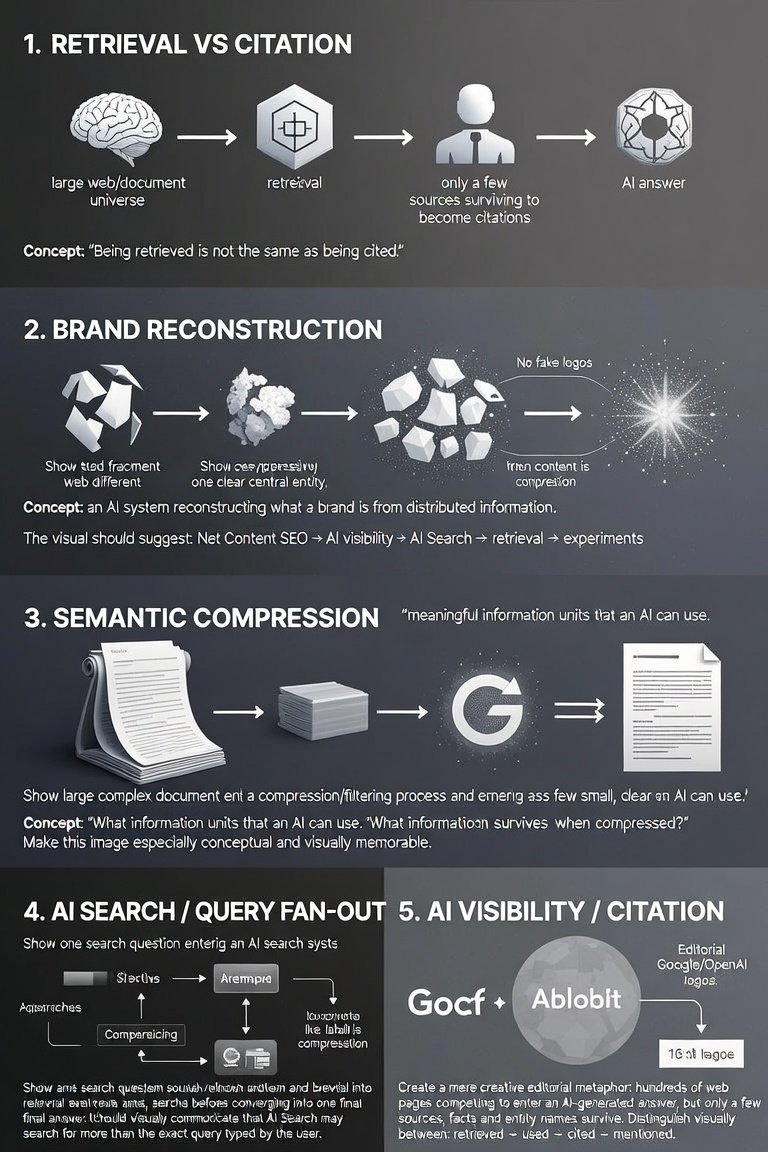
AI Search Is Not Necessarily Answering the Query You Typed
A search query used to look relatively simple.
You typed a question. Google searched for relevant documents.
AI Search complicates that model.
Google now explicitly describes query fan-out as part of its generative AI search experiences. A model can generate multiple related searches to gather information needed to answer the original question.
That has an important consequence for visibility.
The query a user types may not be the only query a publisher needs to be relevant for.
Suppose someone asks:
"How can I improve my company's visibility in ChatGPT and Google AI Mode?"
An AI search system might need information about entity recognition, citations, retrieval, structured information, brand authority or other subtopics before constructing its answer.
A source could therefore become useful without being the best traditional result for the original query.
This suggests a different content strategy.
Instead of creating ten pages targeting ten slight variations of the same keyword, publishers may benefit from building strong coverage of the questions required to reconstruct an answer.
We can describe this as answer coverage rather than keyword coverage.
Google isn't saying that this is a new ranking factor, and neither are we.
But query fan-out changes the retrieval surface.
SEO traditionally asked:
Which query should this page rank for?
AI Search introduces another question:
Which part of an answer could this page become evidence for?
That distinction deserves considerably more experimentation.