
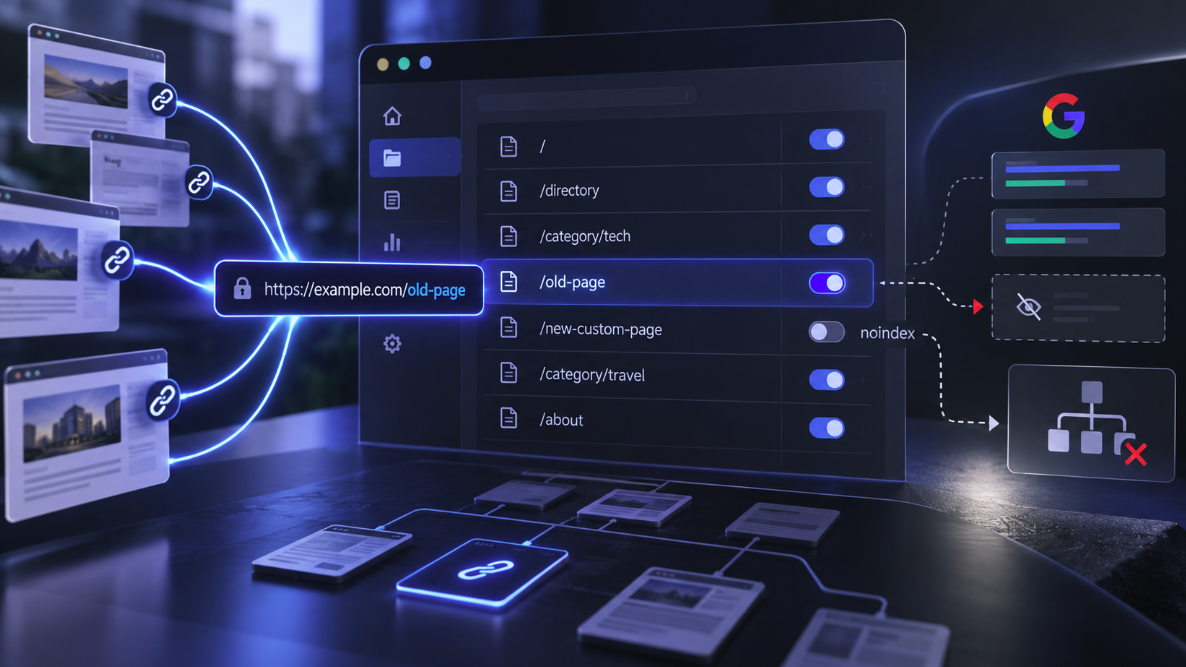
LocusPilot has added a small but strategically useful SEO control to its directory builder: publishers can now create custom pages at specific URLs, including legacy addresses that still attract backlinks, without automatically exposing those pages to Google’s index.
The change, announced in the official LocusPilot changelog on September 5, gives directory owners the ability to add a page at an available address such as /disclosures/ or, more importantly for migrations and rebuilds, an old URL that still has external links pointing to it. The page can then be edited like other content in the platform, linked from navigation if desired, or left accessible only to users who know the address.
Why preserving old URLs matters
For directory owners, redesigns and platform migrations often create a familiar SEO problem: an old page may no longer fit the new site structure, yet the URL has accumulated backlinks over time. Removing it outright can turn those links into dead ends, while rebuilding the exact page inside a new architecture can be awkward or unnecessary.
LocusPilot’s new custom-page system creates a middle path. Instead of forcing every legacy address into the generated directory structure, publishers can recreate a page directly at the old URL and decide what role it should play. That is especially useful when a directory has absorbed a previous website, replaced a manually built site, or consolidated content while trying to preserve the value of links earned before the migration.
The feature is not a substitute for a well-planned redirect strategy. In many migrations, a permanent redirect to a clearly equivalent new page remains the cleaner solution. But there are cases where an old URL still needs to resolve as a real page: legal notices, archived information, partner resources, historical landing pages, or content that continues to receive referral traffic even though it no longer belongs in the main indexable site structure.
The important part is the noindex switch
The more interesting SEO control is what LocusPilot pairs with those custom URLs. According to both the changelog and the platform’s directory management guide, each custom page can be hidden from search engines with a per-page switch. When enabled, LocusPilot adds a noindex directive and excludes the URL from the sitemap, while the page itself remains publicly accessible to anyone who visits the address.
That distinction matters. A directory operator may want an old linked URL to continue resolving for users and referring sites without encouraging Google to treat it as part of the current search-facing content set. Keeping the page out of the XML sitemap also avoids sending mixed signals by actively submitting a URL that the site simultaneously asks search engines not to index.
For publishers managing large local or vertical directories, this can reduce one of the messier side effects of site consolidation: carrying forward dozens of historical pages simply because backlinks still exist, then watching those pages compete with newer category, city, guide, or ranking pages in the index.
A practical migration tool rather than a ranking shortcut
The SEO value here is primarily operational. Preserving a reachable legacy URL can protect user experience, referral traffic and link continuity, but simply keeping an old backlinked page alive does not guarantee that its historical ranking value will transfer elsewhere on the site. Search engines evaluate redirects, canonicalization, page relevance, internal linking and many other signals independently.
That makes the new LocusPilot control most useful when directory owners apply it deliberately. If an old page has a strong modern replacement, a redirect may still be the better choice. If the old address needs to remain available but should not appear in search, the new custom-page plus noindex workflow is a cleaner fit. And if the legacy page itself still deserves to rank, publishers can simply leave indexing enabled and treat it as an ordinary custom page.
LocusPilot also prevents custom pages from taking over addresses already reserved by generated directory features such as city pages, methodology pages, browse pages or best-of pages. That safeguard reduces the risk of a manual legacy URL accidentally colliding with the platform’s own routing as the directory grows.
More granular control for directory operators
The September 5 update fits a broader pattern in LocusPilot’s recent directory work: giving operators more control over how generated sites are crawled, indexed and presented. The platform has recently added sitemap improvements for larger directories and separate indexing tools, while the new custom-page controls move that flexibility down to the individual URL level.
For SEO-focused directory publishers, the result is not flashy, but it solves a real edge case. Old URLs with backlinks no longer have to be treated as either fully indexable content or discarded leftovers. They can remain functional, preserve link paths for users and referring sites, and stay outside Google’s searchable index when that is the more appropriate editorial and technical choice.